

Good men's casual wear starts with a shirt and shorts suited to the weather, a balanced fit, and an outfit that works for the setting. Choose breathable-feeling fabrics for warm days, keep the proportions in check, and use simple color combinations for easy pairing. For a polished look, choose tailored shorts and a button-down instead of athletic shorts.
Casual dressing still calls for practical choices. A loose shirt can look out of balance with roomy shorts, while clashing colors or sporty pieces may feel out of place at a restaurant or relaxed workplace. The right combination depends on comfort, fit, and where you plan to wear it.
This guide covers casual shirts and shorts, easy ways to pair them, and fit details that help an outfit look balanced. It also shows how to adapt casual clothes to different settings and avoid common dress-code mistakes, so you can choose each piece with a clear purpose.
Key Takeaways
- Choose shirts and shorts based on the weather and setting; natural-fiber options can suit warm conditions.
- Pair colors and patterns selectively to keep an outfit coordinated without making every piece compete for attention.
- For a polished meal or resort setting, choose tailored shorts and a button-down instead of athletic shorts.
- Balance the fit of your shirt and shorts so neither piece overwhelms the other.
Casual shirts and shorts
A useful men's casual wear rotation includes short-sleeve and long-sleeve shirts, shorts, and a lightweight layer. A cotton T-shirt with comfortable shorts works for relaxed daytime plans. Choose a button-down when the occasion calls for a neater look. Pick each piece for the weather and activity, whether you're running errands, commuting, or eating outdoors.
For men's casual wear in warm weather, linen, cotton, and rayon are suitable fabric options. A short-sleeve shirt works for daytime errands, while a long-sleeve button-down is another option for outdoor meals. Check the fabric composition and care instructions before buying. Even a climate-appropriate fabric needs care that follows its label.
Shorts range from sporty to polished. Athletic shorts suit exercise and informal activities, while tailored linen shorts create a more structured look. For smart-casual dining in a tropical or resort setting, pair tailored linen shorts with a long-sleeve button-down and driving loafers. This keeps shorts in the outfit while making the overall look feel more finished.
For resort-casual settings, consider linen shirts, well-made shorts, polo shirts, or loafers. Save athletic wear, such as gym shorts, for activities where it fits the occasion. Start with the venue, then choose a shirt and shorts to match its level of formality. A polo with tailored shorts suits a different setting than a T-shirt with athletic shorts.
Care starts with the garment label. Separate colors, use the recommended wash cycle, and follow drying directions. Washing newly purchased clothing before wearing it can help deal with residual formaldehyde, according to the U.S. Government Publishing Office. For garment wet cleaning, 80 degrees F is commonly recommended, according to the Massachusetts Toxics Use Reduction Institute. Warmer water may cause dimensional change, while colder water may not clean properly.
Mixing and matching clothing
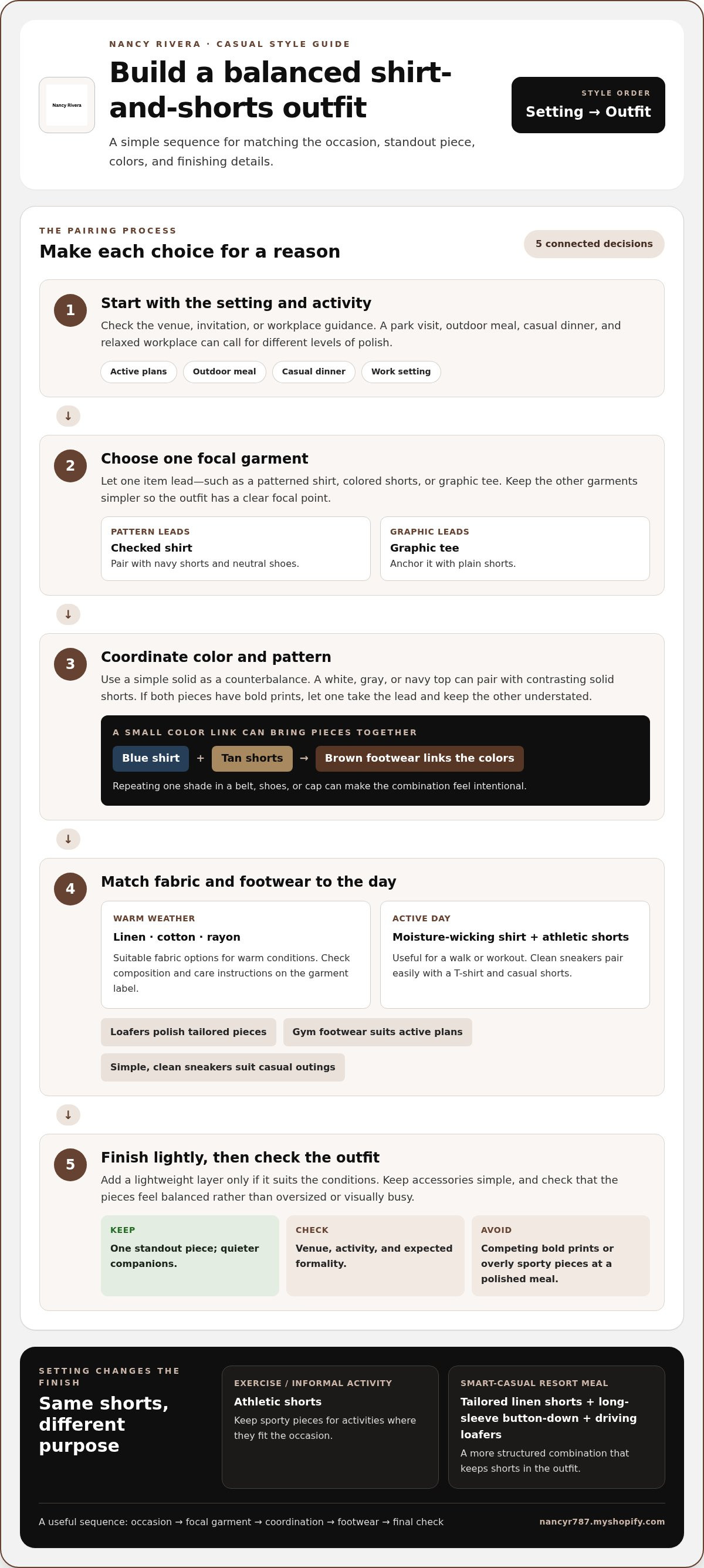
Build the outfit around one standout piece, such as a patterned shirt or colored shorts. Keep the other garments simple so the pattern stands out. For example, pair a checked shirt with navy shorts and neutral shoes. If both your shirt and shorts have bold prints, let one take the lead and keep the other more understated.
Use color to bring separate pieces together. A white, gray, or navy top can pair with shorts in a contrasting solid color. Repeat one shade in a belt, shoes, or cap to make the combination feel intentional. For example, brown footwear can link a blue shirt with tan shorts. If your shirt has a strong print, limit competing colors elsewhere.
Choose shoes to suit the activity and formality of your outfit. Clean sneakers pair easily with a T-shirt and casual shorts, while loafers polish up tailored pieces. Match your shoes to the venue: gym footwear suits active plans, but a casual dinner may call for loafers or simple, clean sneakers.
Moisture-wicking clothing can be useful on active days because the fabric moves sweat away from the skin. Pair a moisture-wicking shirt with athletic shorts for a walk or workout. For a meal or social occasion, a cotton or knit top may look more appropriate. Check garment labels for fabric composition and care needs, then choose according to the activity and setting.
Follow a simple pairing sequence: choose the occasion, pick one focal garment, then coordinate the remaining pieces. A graphic tee can anchor plain shorts; a solid polo can balance patterned shorts. Add a lightweight layer only if it suits the outfit and conditions. Keep accessories simple, such as a cap or belt, to avoid visual clutter.
For another casual top option, browse men’s short-sleeve shirt styles and compare the neckline and knit texture with your existing shorts.
Common dress-code mistakes
“Casual” can mean different things at a backyard gathering, office, or restaurant. A graphic T-shirt and athletic shorts may work for a park visit but feel too relaxed for dinner. Check the invitation, venue description, or workplace guidance first. Follow the clearest setting-specific cue instead of treating every casual event alike.
Another common mistake is choosing for comfort without considering the activity. A loose shirt can catch or shift while cycling, while stiff trousers can restrict movement at an outdoor event. For a day with lots of walking, choose comfortable clothes and shoes suited to the route. For a seated dinner, prioritize a neat shirt and clean footwear.
Overly loud combinations can distract from the outfit. A large graphic, bright shorts, and patterned cap compete for attention when worn together. Choose one standout item, such as a printed shirt, and keep the other pieces understated. A plain top with patterned shorts creates a clear focal point without stacking bold designs.
Check the condition of your clothes, too. A wrinkled button-down, visible stain, or scuffed shoes can make an otherwise suitable outfit look neglected. Before leaving, inspect your shirt, shorts, and footwear in good light. Replace anything visibly worn or choose another clean piece. This quick check helps keep casual clothing appropriate for a meal or meeting.
- Work setting: A plain polo and clean chinos may fit better than a slogan tee and distressed shorts.
- Outdoor gathering: Choose practical footwear, but avoid muddy shoes at a meal.
- Casual dinner: Skip gym-branded tops if the venue feels more polished.
- Family event: Keep graphic placement and visible slogans suitable for the occasion.
Use a simple final check: consider the venue, activity, and expected formality. Then remove anything that feels too sporty, loud, or worn. For example, swapping a graphic shirt for a solid one can make the same shorts more suitable without changing the whole outfit.
Fit and proportions
A balanced outfit depends on how each garment sits on your body. Start with the shirt's shoulder seams: they should align near the ends of your shoulders, not hang down your upper arms. Then check the chest. A button-down should close without pulling, while a T-shirt should lie smoothly without clinging. These checks help distinguish a relaxed fit from clothes that are simply too large.
Sleeve and hem lengths affect a top's proportions. Short sleeves that reach near the middle of the upper arm create a clear outline; sleeves covering most of the elbow can look oversized. For a T-shirt, check where the hem falls in relation to your hips. A very long shirt can make shorts look shorter, while a very short hem may expose the waistband when you move.
Shorts should allow comfortable movement without excess fabric bunching around the hips. Check the waistband while standing and sitting, then walk and bend to see whether the shorts shift or restrict you. A pair that stays in place without digging in is easier to wear day to day. Check the leg opening, too: wide shorts with a very loose shirt can make the whole outfit look oversized.
Balance volume to keep your proportions clear. If your shirt has a roomy cut, choose straighter shorts; if the top is close-fitting, relaxed shorts can balance it. For example, a regular-fit T-shirt with straight-leg shorts creates a simple outline. A waffle-knit V-neck top adds texture, so pair it with uncomplicated shorts to keep the silhouette from feeling crowded.
Before choosing a size, compare the garment measurements with a similar item that fits well. Then try the outfit while standing, sitting, and reaching forward. Check that the shoulder line stays in place, the shirt hem remains comfortable, and the shorts move freely. Browse casual tops to compare neckline and sleeve details with your preferred fit.
MY STORE: 2026 Men S Fashion Waffle Knit Ribbed Sleeve V Neck Short Sleeve T Shirt For Daily Commuting And Casual Wear
MY STORE offers the 2026 Men S Fashion Waffle Knit Ribbed Sleeve V Neck Short Sleeve T Shirt For Daily Commuting And Casual Wear. Its V-neckline, waffle-knit texture, ribbed sleeves, and short-sleeve design provide specific details to compare with your preferred outfit proportions. Consider it when choosing a casual top for commuting or everyday wear.
Pair the shirt with simple shorts so its textured knit remains the main visual detail. Check the neckline, sleeve shape, and overall fit against the rest of your outfit before choosing complementary pieces. This is a practical next step once you've decided which shirt features suit your wardrobe.
Visit MY STORE to view the shirt.
Build a Useful Clothing Rotation
When shopping, fill a clear gap rather than adding another piece with the same role. Notice what you reach for on workdays, for errands, and for social plans. Then choose a garment for a setting you dress for often. This keeps new purchases connected to how you actually get dressed.
For men's casual wear, a useful rotation depends on your schedule and preferred level of formality. Keep a short note of combinations that work and what would make them easier to wear. A versatile top or a piece for a different occasion can give your existing clothes more options without requiring a complete wardrobe change.
MY STORE offers clothing and accessories to browse as you decide what belongs in your rotation. Explore the available categories and choose pieces that suit how and where you plan to wear them.
Explore MY STORE’s clothing and accessories and take the next step toward a more practical wardrobe.
Frequently Asked Questions
How should men dress casually for different seasons and occasions?
Adjust your layers and fabric weight for the season, then match the outfit's formality to the event. For a cool-weather walk, wear a long-sleeve shirt under a lightweight jacket; for a warm outdoor gathering, choose a short-sleeve top and comfortable trousers. A casual office lunch may call for a cleaner, more structured outfit than a weekend errand.
What are popular men's casual clothing styles and outfit combinations?
Simple, coordinated outfits are easy to assemble: try a plain crew-neck shirt with dark jeans, or a polo with chinos. For a layered look, wear an open overshirt over a solid tee. Keep one item visually prominent, such as a textured top, and choose quieter colors for the rest to maintain a clear overall appearance.
How should casual clothes fit men?
Casual clothes should allow comfortable movement while keeping their intended shape. A shirt, for example, should not pull across the back when you reach forward, and trousers should sit securely without constant adjustment. Compare a garment's measurements with a piece you already wear comfortably, and consider its cut as well as its labeled size.
How can men dress casually for work without violating a dress code?
Use your workplace dress code as a guide, then choose casual pieces that fit within it. If the guidance allows jeans but excludes graphic tops, wear dark, clean denim with a plain shirt or polo. For a client meeting, add a structured layer if that fits workplace norms. Don't assume that casual means the same outfit for every role or office.
What fabrics are most comfortable and durable for men's casual wear?
Linen, cotton, and rayon are suitable options for warm weather. Choose according to the climate and check the garment's care instructions.