

Browse men's clothing online by product category first, then narrow your search by style or shopping section. Starting with the garment or look you need keeps browsing focused, whether you’re exploring new arrivals, sale picks, or bundles.
Online clothing catalogs may organize items in several ways, so choose a clear starting point. Select a category such as men’s wear, then compare the styles and product types shown. Treat new arrivals, sale picks, and bundles as separate ways to browse, not as garment categories.
This guide explains how to move between those sections and browse clothing by style and product category. It also covers the men’s wear and fashion accessories available at MY STORE, including ARTIE Men’s Wear and a waffle-knit V-neck T-shirt. Use the category and style labels to scan the catalog and find relevant options.
Key Takeaways
- Start with a product category to narrow the catalog, then use style labels to compare suitable options.
- Browse new arrivals for recently added catalog items; use sale sections and bundles as separate ways to explore selections.
- Compare T-shirts, shirts, pants, jeans, and shorts by garment type before narrowing your choice by style.
- For a men’s wear option, view MY STORE’s waffle-knit V-neck short-sleeve T-shirt and ARTIE Men’s Wear.
New arrivals and trending styles
Start with new arrivals if you want to browse recently added items. Choose a garment category first, such as T-shirts, shirts, or pants, then compare pieces within it. That keeps a shirt from being compared with unrelated accessories. On each product page, look for the listed cut, neckline, sleeve length, color, and fabric details. These attributes help distinguish similar items more reliably than a broad trend label.
Trending styles can mean different things from one online catalog to another. Treat the label as a browsing aid, not proof that a style is popular everywhere. Instead, compare specific design details, such as a V-neck, short sleeves, ribbed finish, or relaxed silhouette, with clothes already in your wardrobe. For a versatile top, consider its neckline, sleeve length, and color alongside the pieces you plan to wear with it.
Best sellers offer another way to browse, but the label alone won’t tell you whether an item suits your needs. Compare the product details, available size choices, and images before deciding. A short-sleeve T-shirt may differ from a new arrival in knit texture or neckline, so inspect each listing rather than choosing by label alone.
- New arrivals: Filter by garment type, then review the newest additions in that category.
- Trending styles: Compare visible details such as silhouette, neckline, sleeve, and finish.
- Best sellers: Use the label to find popular listings, then assess each item's details.
- Final comparison: Open product pages side by side and match features to your intended use.
Keep the comparison focused. For men's clothing online, select a category, shortlist a new arrival and a bestseller, then compare their product descriptions. Check whether each listing shows the details you need to make a choice. This method separates catalog placement from garment features. It also helps you identify whether a style works for daily wear, commuting, or a specific outfit, without assuming that a trending label guarantees the right fit.
Sale items and multi-item bundles
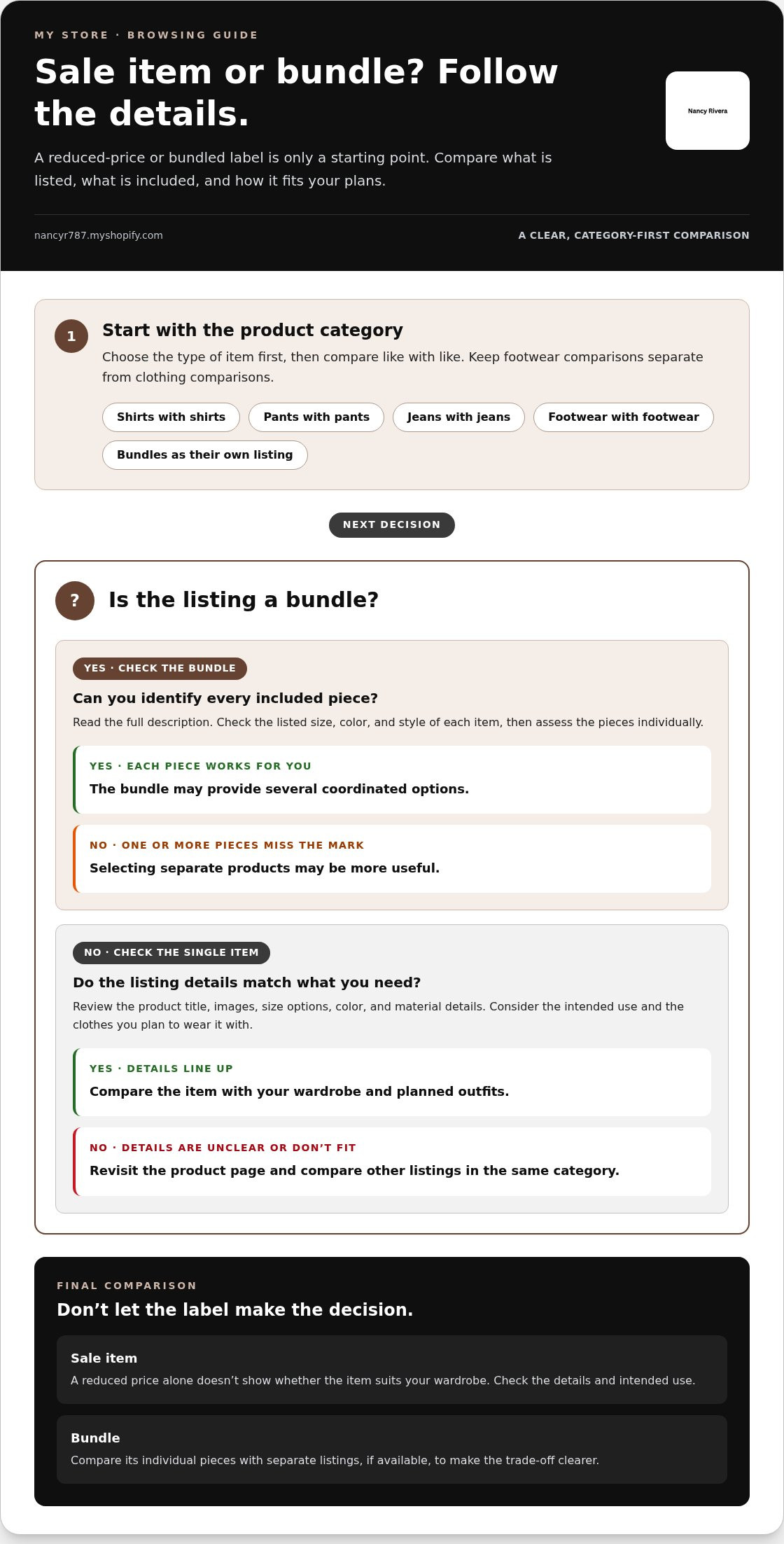
Open the sale section and narrow your search by garment type. Compare shirts with shirts, pants with pants, and jeans with jeans. A reduced price alone doesn’t show whether an item suits your wardrobe, so review the product title, images, size options, color, and material details. For example, compare sale shirts by sleeve length and neckline, not just by their sale label. Keep the intended use in mind, such as daily wear or a specific outfit.
When comparing footwear, consider the listed style and visible design details alongside the clothes you plan to wear. Use the product description and images to assess the features that matter to you. Two pairs in the sale section may serve different purposes: a casual shoe and a dress shoe, for example, work with different outfits. Keep footwear comparisons separate from clothing comparisons.
Bundles group multiple items in one offer or listing. Read the full description to see what is included, then assess each piece individually. A clothing bundle might combine tops, while another may pair different garment types. Check the size, color, and style of every listed piece. If one item doesn’t meet your needs, selecting separate products may be more useful.
- Filter: Choose the category first, such as jeans or footwear.
- Compare: Review each item's details, size options, and intended use.
- Inspect bundles: Identify every included piece and its listed attributes.
- Decide: Choose sale items that work with existing clothes and planned outfits.
Before adding a sale item or bundle to your selection, revisit the product page. Confirm that the pictured garment matches the title and description. Compare the bundle’s individual pieces with the separate sale listings, if available. This makes the trade-off clearer: one listing may suit a specific need, while a bundle may provide several coordinated options. Use those details to compare sale clothing and footwear without treating a marked-down label as the deciding factor.
T-shirts, shirts, pants, jeans and shorts
Compare garments by cut, construction, and intended use. Review each product description and image before narrowing your selection.
T-Shirts and Shirts
For T-shirts, compare the neckline, sleeve length, fabric description, and overall shape. A short-sleeve V-neck differs from a long-sleeve crew neck. Check the product images for visible details, then read the description for listed materials and fit information. These attributes make it easier to compare similar tops without relying on broad style labels.
Compare shirts by collar, closure, sleeve length, and stated fabric. A button-front shirt and a pullover top offer different outfit options. Consider where you plan to wear each piece, then compare its listed features with the clothes you own. Base your decision on the details shown for each garment.
Pants, Chinos, and Jeans
Compare pants by cut, waistband, closure, pockets, and listed fabric. Chinos and jeans are distinct categories, so consider each in light of how you plan to wear it. Product images can show visible construction details, such as pocket placement or leg shape. Read the description for any stated fit, material, and care information.
For jeans, compare the wash, rise, leg shape, and visible finishing. For chinos, focus on the listed silhouette and fabric description. These details help distinguish denim from a more structured trouser option. Consider how each style works with the tops and footwear you plan to wear, not just how it looks on its own.
Shorts require attention to length, waistband, pocket layout, and fabric details. Compare images from multiple angles where available, and read the product description for stated features. Match the cut to the intended setting and the tops already in your wardrobe. For all five garment types, use the same sequence: identify the category, compare listed attributes, and select the features that fit your needs.
Men’s clothing by product category
Start with the garment type rather than a broad style label. Searching by category separates tops, bottoms, outerwear, and accessories, making it easier to compare items with similar purposes. For example, compare a cap with other headwear, not with a T-shirt. Use category filters to remove unrelated results before reviewing product details.
Choose comparison points that suit the category. For tops, review the neckline and sleeve design; for bottoms, focus on cut, waistband, and pockets. For accessories, check the shape, closure, and how each item works with your clothes. A belt and a cap may both complete an outfit, but they serve different functions and have different details to compare.
- Tops: Group T-shirts, shirts, and knitwear by garment type.
- Bottoms: Separate pants, jeans, shorts, and joggers before comparing cuts.
- Outerwear: Compare jackets or coats by listed construction and intended use.
- Accessories: Browse belts and caps separately from clothing categories.
Choose the category that matches what your wardrobe needs. If you’re looking for a casual top, compare T-shirts and knitwear. If you need an accessory, consider belts or caps alongside your existing clothes. Open relevant listings and compare the product name, images, and description. This practical sequence keeps browsing focused and avoids comparisons between unrelated features.
Use category labels to build a shortlist, then compare items within that group. A jogger and a pair of jeans may both serve as everyday bottoms, yet differ in silhouette and styling. Keep each comparison tied to the product type and the details shown. Browse clothing by product category to apply this approach to your next selection.
MY STORE: 2026 Men S Fashion Waffle Knit Ribbed Sleeve V Neck Short Sleeve T Shirt For Daily Commuting And Casual Wear
MY STORE offers men’s wear options for shoppers comparing casual tops and everyday clothing. The 2026 Men S Fashion Waffle Knit Ribbed Sleeve V Neck Short Sleeve T Shirt For Daily Commuting And Casual Wear is described by its waffle-knit texture, ribbed sleeves, V-neck, and short-sleeve design. Compare these details with your preferred neckline, sleeve length, and fabric texture. ARTIE Men’s Wear provides another men’s wear category to browse.
Once you’ve narrowed your search by garment type and intended use, explore MY STORE’s men’s wear, including ARTIE Men’s Wear and a waffle-knit V-neck T-shirt described for daily commuting and casual wear. Review the product page details to decide whether a piece fits your wardrobe.
Plan Your Next Catalog Visit
Before browsing men's clothing online, identify what your wardrobe needs. Note the garment type, where you expect to wear it, and what it should pair with. A short checklist keeps your search focused on useful additions instead of unrelated options.
Separate replacement needs from new outfit ideas. If you’re replacing a garment, compare options with a piece you already wear often. For a new combination, consider which clothes the new item should work with. Make a note of preferred colors, shapes, and practical details. These priorities make comparisons more specific and help you decide which listings to inspect closely.
Use your shortlist as a reference during your next catalog visit. Keep the decision tied to your wardrobe and intended use, rather than browsing without a clear outcome. For help shopping, contact MY STORE. Start with one clothing need and build your next selection from there.
Frequently Asked Questions
Where can I buy affordable men's clothing online?
Compare listed prices for similar garment types as you browse. MY STORE offers men’s wear, including a waffle-knit V-neck short-sleeve T-shirt and ARTIE Men’s Wear. Set a spending limit, then assess each item’s details and intended use. A lower price is worthwhile only if the garment suits your needs and wardrobe.
How do men's clothing brands compare for sizing and fit?
Compare the size chart and fit information for each item, since size labels alone don’t tell you how a garment will fit. Take your measurements and check them against the chart for the specific product. Consider the cut as well: a fitted shirt and a relaxed shirt may feel different in the same labeled size. Check tops and bottoms separately.