

Joggers aren’t automatically business casual. Athletic joggers can work in an office when their cut resembles trousers and the dress code permits them. Tailored trousers or chinos remain the safer choice for interviews and formal meetings. The choice between athletic joggers and tailored commuter pants for work depends on the setting, dress code, and how much mobility you need.
Comfort matters during a commute, exercise, and travel, but a relaxed fit may not suit a workplace. This comparison explains when joggers fit, how tailored trousers and chinos differ, and what to consider for exercise, travel, and lounging.
See how fabric, silhouette, and occasion affect each option, from office-to-gym transitions to days when a polished appearance matters.
Key Takeaways
- Assess fabric, silhouette, cuffs, drawstrings, pockets, and visible branding to judge whether athletic pants look appropriate for your workplace.
- Match the pants to the setting: trouser-like joggers may suit some business-casual offices, while tailored trousers or chinos provide a more formal appearance.
- Choose athletic pants for exercise and relaxed settings based on mobility and comfort; consider how the cut and fabric suit travel and extended sitting.
- For commuting, weigh ease of movement against a polished look, and consider whether one pair needs to work across office, travel, and leisure.
Complete Fit Guide: Men's Athletic Pants Styles
When assessing athletic pants, examine the fabric, leg shape, ankle finish, waistband, pockets, and branding. Each detail affects both movement and whether the outfit looks casual or work appropriate.
Fabric Stretch and Moisture Wicking
Performance fabrics may use stretch-woven construction to support mobility and moisture management. Stretch can help fabric move with the body when walking, bending, or training, while moisture-wicking materials move perspiration away from the skin. A commuter who walks to work, for example, may value flexible fabric on the way in but still want a clean finish indoors. Consider how the fabric looks at rest, not just how it performs in motion.
Fit and Details
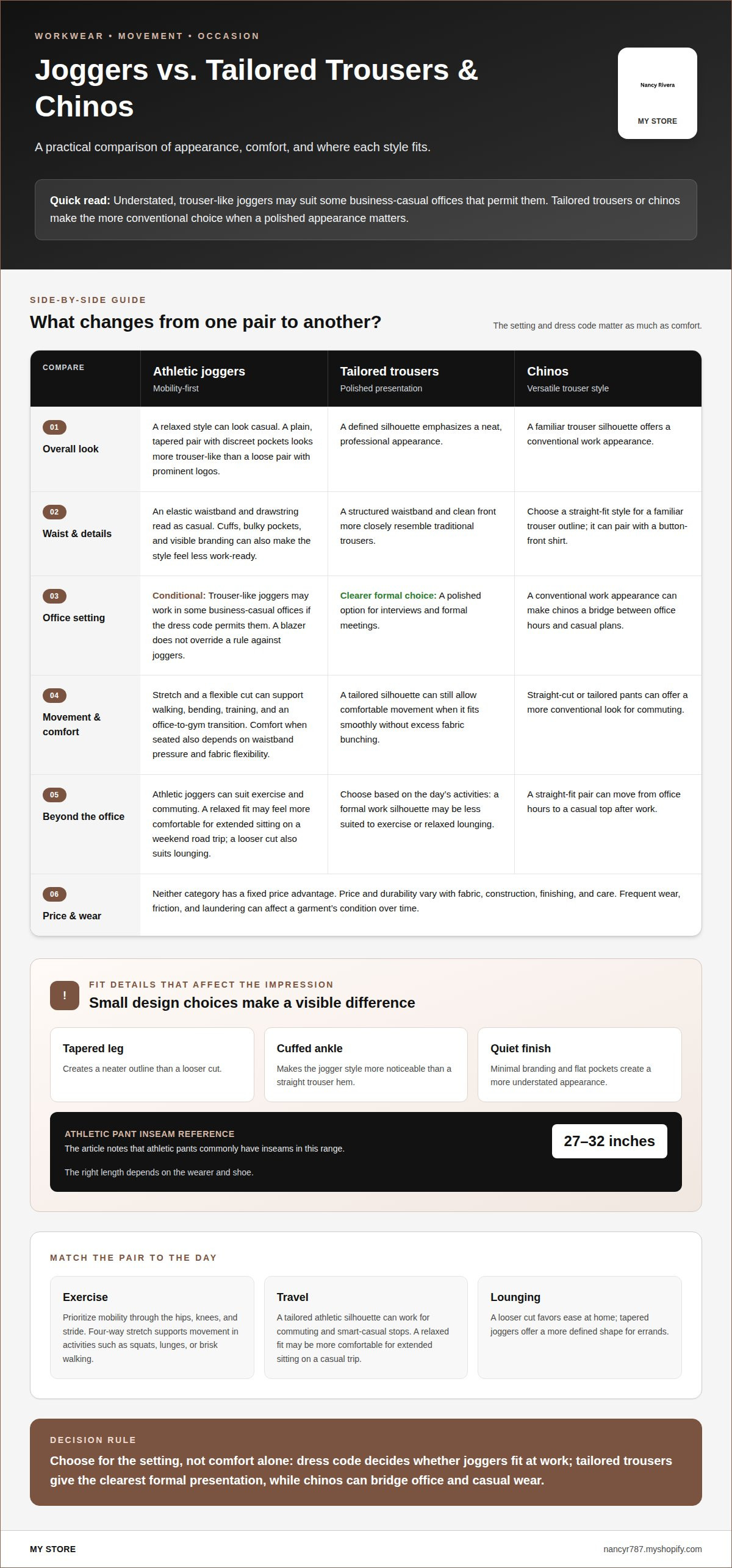
Fit describes the leg shape and room through the seat and thighs. Other details include cuffs, drawstrings, pockets, and branding. A tapered leg creates a neater outline than a looser cut, while a cuffed ankle makes the jogger style more noticeable. Drawstrings and bulky pockets can look more casual; minimal branding and flat pockets create a quieter appearance. A plain, tapered pair with discreet pockets, for example, looks more trouser-like than a loose pair with prominent logos.
Polished Professional Fit
For a polished professional look, choose a clean, tailored silhouette that sits smoothly at the waist and falls neatly through the leg. Joggers and commuter pants should allow comfortable movement without excess fabric bunching at the knees or seat. A blazer cannot make joggers appropriate if the workplace dress code prohibits them. Understated, trouser-like joggers may suit some business-casual offices, but tailored trousers or chinos offer a clearer professional presentation for interviews and formal meetings.
Check the hem length as well as the overall cut: athletic pants commonly have inseams from 27 to 32 inches. The right length depends on the wearer and shoe, while a gathered cuff keeps the ankle finish distinct from a straight trouser hem.
Athletic joggers compared with tailored trousers and chinos
Athletic joggers prioritize mobility and a relaxed feel; tailored trousers and chinos emphasize a defined silhouette. For commuting and office wear, straight-cut or tailored pants resembling chinos offer a more conventional work appearance, especially when wrinkle resistance or a water-resistant finish matters.
The waistband also affects comfort throughout the workday. An elastic waistband with a drawstring feels casual, while a structured waistband and clean front more closely resemble traditional trousers. Joggers may suit a relaxed office dress code, for example, but wearing a blazer does not override rules that prohibit them.
Price varies with fabric, construction, and finishing, so neither category has a fixed price advantage. Durability also depends on these factors and on care: frequent wear, friction, and laundering can affect a garment’s condition over time.
Choose based on the setting, not comfort alone. For an interview or formal meeting, tailored trousers provide a clearer professional presentation. In a business-casual office that permits understated, trouser-like joggers, their flexibility may be useful during a commute. Chinos can bridge both settings with a familiar trouser silhouette.
Consider how each pair fits into your wardrobe. Straight-fit chinos can work with a button-front shirt during office hours, then with a casual top after work. Athletic joggers may be a better fit for a commute that includes walking or an office-to-gym transition. Neither option suits every occasion: the dress code and your day’s activities determine which features matter most.
For a relaxed commute outside formal settings, consider men’s casual wear alongside your work-pant options. Keep the distinction clear: a casual top does not change whether joggers meet an office’s dress expectations.
Choosing pants for exercise, travel, and lounging
Choose pants according to the activity, since exercise, travel, and lounging place different demands on fit and fabric. Tailored or slim-fit athletic pants can bridge commuting and exercise, including an office-to-gym transition. They can also suit golf and other smart-casual settings. A slim pair, for example, can take you from a morning commute to a practice session without the bulk of a relaxed lounge style.
For exercise, prioritize mobility through the hips, knees, and stride. Four-way stretch fabric expands crosswise and lengthwise to support movement during squats, lunges, or brisk walking. A straight or tapered athletic cut may feel less loose during activity than a relaxed fit. The athletic joggers vs tailored commuter pants for work decision partly depends on whether exercise or office wear is the priority that day.
For travel, consider how the pants work across the day. A tailored athletic style can suit a commute and remain comfortable for a walk through an airport or station. If your itinerary includes meetings, a trouser-like silhouette pairs more easily with a collared shirt. For a weekend road trip, a relaxed fit may be more comfortable for extended sitting and casual stops.
Lounging calls for ease rather than a work-ready outline. A looser cut can feel less restrictive at home, while tapered joggers provide a defined shape for errands. Compare athletic joggers vs tailored commuter pants for work according to the day’s settings, rather than expecting either style to suit every activity. Let your main activity guide your choice of cut and fabric.
- Exercise: Choose a flexible cut for movements such as lunges or golf swings.
- Travel: Select a tailored athletic silhouette for commuting and smart-casual stops.
- Lounging: Use a relaxed or looser style for home and casual errands.
Which is more comfortable for commuting and sitting all day?
Commute comfort depends on waistband pressure, fabric flexibility, and how the pants feel when seated. Joggers often feel less restrictive when bending to board a train or sitting in a car, and their elastic waist can feel comfortable after a long day. Tailored commuter pants can offer similar ease if the fabric stretches and the waistband remains comfortable while seated.
Check the fit while seated, not just while standing. A waistband that feels fine at a desk may press against your stomach during a long drive. Tight fabric across the thighs can restrict movement when cycling or climbing stairs. Too much fabric, on the other hand, may bunch behind the knees on a train seat. A straight or tailored cut should allow room to bend while keeping a clean outline.
Temperature matters during extended wear. Breathable work pants can help workers stay cool during shifts lasting 12 hours or more. A commuter walking between transit stops may prefer fabric that moves comfortably and does not feel heavy. In a warm office, a thicker performance fabric may feel less comfortable than a lighter option. Fabric weight and airflow affect comfort as much as the leg shape.
For a day that combines commuting and office work, assess the whole outfit. Joggers may suit a relaxed workplace and a walk after work, while tailored pants can feel more appropriate for meetings. Sitting all day does not make either style universally more comfortable. Choose the pair that stays comfortable at your desk, on transit, and during brief walks without violating the dress code.
Use these practical checks before choosing:
- Desk: Sit and note pressure at the waist, seat, and thighs.
- Commute: Bend, climb stairs, or cycle to assess movement.
- Warm settings: Favor breathable fabric for extended wear.
For a casual commute, browse commuting apparel alongside your work-pant options.
MY STORE
MY STORE offers clothing and accessories for a commuting and casual wardrobe. After comparing joggers with tailored commuter pants, use the distinction between workwear and casualwear to guide the rest of your outfit. The catalog includes versatile apparel and a men’s short-sleeve waffle-knit V-neck shirt described for daily commuting and casual wear. These pieces can complement a relaxed outfit, while your pants should still match the workplace dress code and your daily activities.
For workplaces that expect a polished appearance, choose pants that meet the dress code, then select casual pieces for less formal plans. Explore MY STORE’s clothing and accessories to build out your everyday wardrobe.
Make Your Next Workwear Choice
Use your weekly schedule to decide where comfort and appearance need to meet. The choice between athletic joggers and tailored commuter pants for work becomes clearer when you consider the day’s main setting, not just the journey to the office. Account for meetings, desk time, transit, and after-work activities, then choose an outfit suited to the most formal part of your day.
For a versatile wardrobe, keep workwear decisions separate from casual outfit choices. This makes it easier to choose clothes for commuting and downtime without expecting one garment to work in every setting. Start by identifying the outfit you need most, then browse options that suit that use.
Contact MY STORE to discuss your clothing needs. Choose the option that fits your routine, and move ahead with confidence.
Frequently Asked Questions
Can joggers be worn to work in a business casual setting?
Yes, joggers can suit business casual when the workplace permits them and their appearance fits the setting. A plain pair with a trouser-like finish, for example, may work better for a casual team day than joggers with conspicuous athletic styling. Business-casual expectations vary, so the dress code is the deciding factor. If it excludes joggers, choose another style of pants.
Should I wear joggers to an interview or a first day at work?
For an interview, choose tailored trousers or chinos for a clearly professional presentation. This avoids making joggers the focus before you know the workplace’s expectations. On your first day, take the same conservative approach if the dress code is unclear. Once you understand the office norms, you can decide whether trouser-like joggers suit later workdays.
Are expensive joggers more acceptable for work?
No. A higher price does not make joggers appropriate if the workplace dress code prohibits them. Suitability depends on the rules and the garment’s appearance, not its cost. A low-profile pair, for example, may look more appropriate for the office than a costly pair with prominent sporty details. Choose for the setting, not price as a signal of formality.
Can I wear joggers with a blazer to the office?
Only if the dress code allows joggers. A blazer cannot make them acceptable if the workplace prohibits them, and the combination may still look too casual for formal meetings. In an office that permits trouser-like joggers, pair them with a simple blazer and understated shoes. For interviews or formal presentations, tailored trousers are a more predictable choice.
What kind of joggers look most professional?
Choose joggers with a clean, trouser-like silhouette, minimal visible branding, and no bulky athletic details. A smooth front and neat ankle finish can make an outfit look more considered than a loose, heavily detailed pair. For example, pair understated joggers with a collared shirt rather than a graphic top. The workplace’s dress expectations still determine whether the look is appropriate.
What should I ask HR before wearing joggers?
Ask whether the dress code allows joggers and distinguishes between athletic and trouser-style designs. Clarify any limits for client meetings, interviews, or formal office days. You can also ask whether the policy applies across departments or varies by role. Specific questions help clarify what written or customary dress expectations mean for your workplace.