

The belt that looks right on its own may not suit the clothes or purpose you have in mind. Start with fit and intended use, then compare material, width, and buckle style. This order helps narrow your options before product details start to blur together.
Choosing between leather, imitation leather, elastic, and other constructions raises practical questions. So does finding a width that works with your clothing or a closure that suits your preferences. These details are easier to compare once you know how and where you plan to wear the belt.
This guide covers the main points to consider, from everyday and fashion styles to differences in material and construction. It also explains how to compare fit, belt width, and buckle types. The collection includes 19 belt products across several categories, with details such as materials, buckle types, colours, and selected size variants. Use this overview to shortlist suitable styles and browse with a clearer idea of what to look for.
Key Takeaways
- Choose a belt for its main purpose, whether that is securing trousers or adding definition at the waist.
- Match the width to your clothing’s loops, and consider how the buckle will look with the outfit.
- Compare leather, imitation leather, nylon, and elastic constructions by their stated material and intended use.
- Before browsing, check purpose, width, closure, material, and size to focus your search.
Belt Types: Start with the Job Your Belt Needs to Do
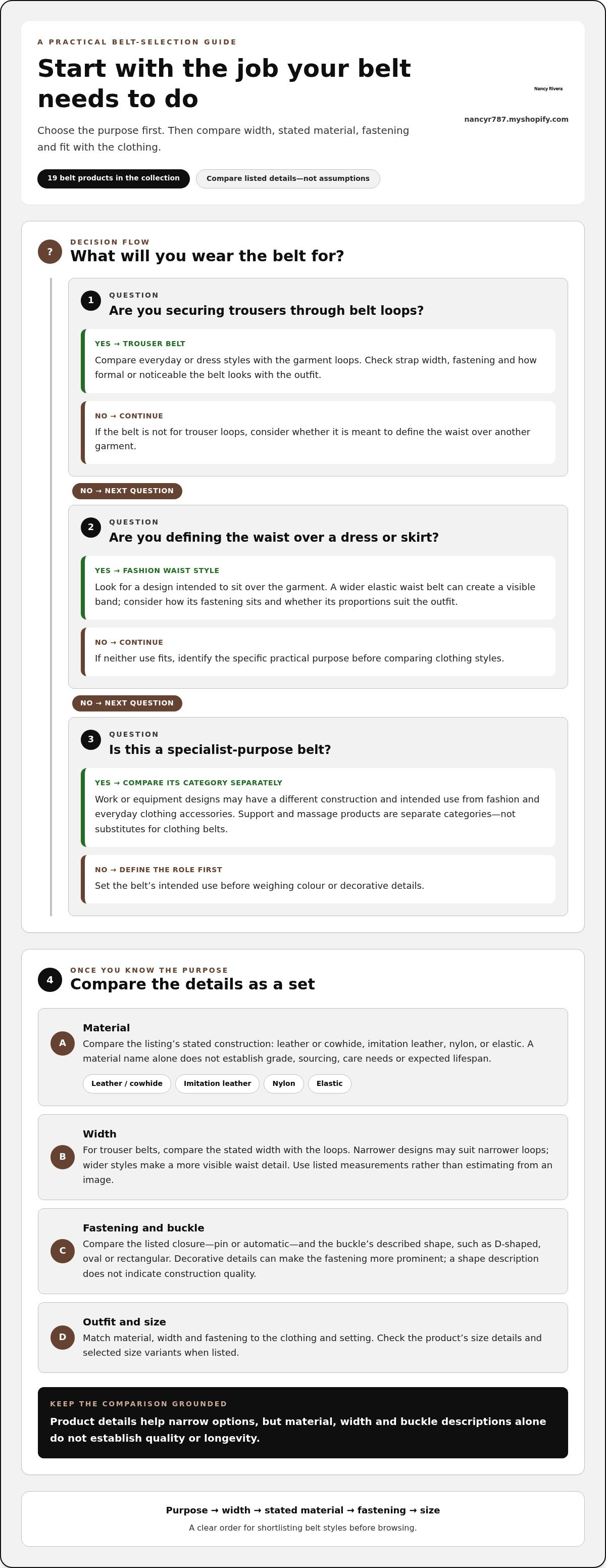
A belt can secure clothing, add a decorative detail, or serve a specific practical purpose. Identify the job first. A plain trouser belt, a dress accessory, and a wide elastic waist style may all sit at the waist, but they suit different clothing and uses. Don’t assume that every style is interchangeable.
Choose by intended use before comparing colour or decoration. For a belt worn through trouser loops, begin with width, fastening, and the formality of the outfit. To define the waist over a dress or skirt, look for a fashion design intended to sit over the garment. For a broader overview of the history and types of belts, see this reference on clothing belts.
Everyday, dress, and fashion belts: what separates them?
Everyday trouser belts are designed to work with clothing loops. Their shape and buckle can be simple or more noticeable, depending on the outfit. Dress styles tend to have a more restrained appearance that suits formal clothing. Neither category has one required look, so compare the belt’s width and buckle with the loops and other details on your clothes.
Width affects both appearance and where a belt can be worn. A narrower trouser style generally suits narrower loops, while a wide elastic waist belt creates a more visible band over clothing. That wider style can work as a decorative accessory over a dress or skirt rather than as a standard loop-threaded trouser belt. Consider how the fastening sits and whether the proportions suit the garment.
Fashion belts and specialist-purpose designs
Fashion waist accessories and practical trouser belts meet different wardrobe needs. A decorative waist style adds a visible detail over an outfit; a trouser belt is selected to pass through loops and coordinate with the rest of the clothing. Specialist designs, such as those made for work or equipment use, may have different construction and intended uses from fashion and everyday clothing accessories.
Support products and massage products are separate from fashion and trouser accessories. Their purpose is different, so don’t choose one as a substitute for a clothing accessory or assume it provides a health benefit. Keep the comparison focused on the stated product category and intended use.
Use this quick sequence before considering colour or decorative details:
- Secure trousers: Compare everyday or dress designs with the garment loops.
- Define a waist: Consider a wider fashion style worn over a dress or skirt.
- Meet a specialist need: Compare the relevant product category separately from clothing accessories.
Starting with purpose gives each option a clear role and makes later comparisons more useful.
How to Compare Belt Materials, Widths, and Buckle Types
Compare product details as a set. Material describes the stated construction, width helps show how the design may pair with clothing, and the fastening affects its appearance and use. These details can help you shortlist options, but they don’t establish quality or longevity on their own. The collection includes leather, imitation-leather, and elastic styles, with buckle and colour details on selected listings.
Material: Leather or cowhide descriptions name the stated material. Imitation leather identifies a non-leather alternative; nylon and elastic describe other construction categories. Use the product wording to compare items rather than inferring a grade, source, care method, or performance.
Width: Narrower designs may suit trouser loops, while wider styles create a more visible waist detail. Compare the width with the garment and its loops.
Fastening: Pin, automatic, and decorative buckle descriptions indicate different closure or visual categories. Compare the stated buckle type and shape.
Intended outfit: Match the material, width, and fastening to the clothing and setting you have in mind.
Which material suits your intended use?
Start with the product description. A listing that says leather or cowhide names the material as described, while imitation leather identifies an alternative construction. Nylon and elastic are separate material or construction descriptions, not leather equivalents. The collection’s range lets shoppers compare these categories without assuming they perform alike. A material term alone doesn’t establish leather grade, sourcing, care needs, or expected lifespan. For more background on different types of belts and styling, use this separate overview, then compare products by their stated details.
Use material as one selection filter, not as a quality ranking. Consider the outfit and the belt’s intended role, then compare the details stated for each option. Don’t infer durability or special care instructions from a material name alone.
How width and buckle design affect your choice
Width needs to work with the clothing. For a trouser belt, compare the strap width with the loops; for a waist accessory worn over clothing, consider how its broader shape sits against the outfit. No single width suits every garment. Use the stated measurements to make a more reliable comparison than estimating from a product image.
A pin buckle uses a pin-and-hole fastening style, while an automatic buckle belongs to a different closure category. Neither is universally better. Compare the listed design with your intended outfit. Shape also affects appearance: D-shaped, oval, and rectangular buckles have distinct outlines, while decorative details can make the fastening more prominent. A shape description alone doesn’t indicate construction quality.
For a focused comparison, browse the belt selection by its stated material, width, and buckle details.
Belt Fit and Outfit Matching: Narrow Down the Right Option
Start with the clothing, not the colour. Decide whether you’re dressing trousers with loops, adding a waist detail over a dress, or styling a skirt. Then check the garment’s construction and compare the accessory’s width, fastening, and appearance with that specific outfit. This helps separate loop-compatible designs from wider styles intended to sit over clothing.
Matching width and closure to clothing
For trousers, inspect the belt loops before choosing a width. Compare the product’s stated width with the loops’ internal clearance so the strap can pass through without bunching. Loop size and placement vary between garments, so assess the clothing you plan to wear rather than relying on a general width rule.
Wide waist designs can suit dresses or layered clothing, where they sit over the fabric rather than threading through loops. Their visible shape may define the waist, but there’s no single required way to wear one. Consider where the fastening lands and how its size and shape relate to the garment’s details.
Closure and formality work together. A prominent decorative buckle creates a stronger visual focal point; a less noticeable fastening may suit outfits with minimal hardware. Compare the buckle’s shape and finish with the clothing, shoes, and other accessories. The goal is a coordinated appearance, not an exact match.
Choosing a colour and style for your wardrobe
Use frequently worn clothes as a colour reference. Black, brown, red, blue, and neutral shades can each coordinate with different wardrobe palettes. Treat colour matching as an option, not a compatibility rule. A contrasting shade can add a visible accent, while a colour already in the outfit can create a more consistent look. Choose based on the clothes you expect to wear with the belt.
Style should also suit the clothing’s level of formality. A simple design can sit quietly with a patterned shirt, while a more noticeable buckle or wider shape can add definition to a plain outfit. Compare the belt with the shirt’s neckline, pattern, and other visible details rather than choosing it in isolation.
A waist accessory can visually divide a dress or skirt by drawing attention to the waist. Placement, width, and contrast all affect the result. Use those details to create the look you want without treating one silhouette as the only suitable option.
Before choosing, check:
- The clothing and intended setting.
- Whether the garment has loops or needs a waist style worn over clothing.
- Stated width compared with loop clearance.
- Fastening shape and visibility in relation to the outfit.
- Whether a coordinating or contrasting colour better suits your wardrobe.
Use this checklist to narrow your options before comparing individual belt styles.
Belt Shopping Mistakes to Avoid Before You Choose
One accessory doesn’t need to serve every outfit or purpose. A design for trouser loops may not suit a dress styled with a wide waist belt, and a decorative buckle may not fit every setting. Decide what clothing and use you’re buying for before comparing colour or appearance.
Similar-looking options can differ in material, width, fastening, or size variants. Product photos show overall appearance, but the written specifications provide details for comparison. Use those details to build a shortlist of suitable choices before opening product pages.
Common fit and product-detail oversights
Review the listed size variants and measurement notes against your requirements. A measurement may refer to the item’s total length rather than the wearer’s waist size, so don’t treat the two as interchangeable. Check what each measurement describes before using it to judge fit.
Avoid choosing by appearance alone
Colour and buckle shape are only part of the comparison. Check material, closure, width, and intended clothing together. Separate decorative details, such as a distinctive buckle, from functional information about fastening and dimensions. Product images can’t establish every specification, and similar colours or silhouettes don’t mean two options have identical construction or sizing.
Use this checklist before deciding:
- Confirm intended use. Identify the clothing and setting the accessory is for, such as trousers with loops or a dress worn with a waist style.
- Compare width. For looped clothing, compare the stated width with the available loop clearance. For over-garment wear, consider how the width sits against the outfit.
- Review the closure. Check the stated fastening and buckle design, then consider its visibility alongside the clothing.
- Read the material description. Distinguish leather, imitation leather, nylon, elastic, or other stated constructions without inferring unlisted qualities.
- Check size information. Review each size variant and measurement description. Confirm what the measurement refers to before using it to judge fit.
This sequence helps remove options that don’t match the intended use before appearance becomes the deciding factor. Shortlist a few choices, then compare their specifications side by side. Browse belt styles by type and detail to compare product descriptions.
Belt Collection Examples: Compare Styles Before You Browse
The examples below show how to compare products by their stated names, materials, construction, and buckle details. Use the table to identify options that may suit your intended clothing, then review the individual listing for its displayed colour or size variants. Similar labels don’t make different designs interchangeable, so compare each item’s specifications before deciding.
| Product name | Stated material or design | Colour or size variants |
|---|---|---|
| Women’s Skirt Dress Belt Women’s Belt Elastic Wide Belt | Elastic wide design; 7.5 cm width | Compare the listed colour and size options |
| Thin Belt Fashion Belt Small Steel Buckle Belt | Imitation leather; D-shaped buckle | Review the options shown with the product |
| Vintage belt pin buckle belt | Top-layer cowhide; oval alloy buckle; pin fastening | Review the options shown with the product |
| Fashion belt simple casual business men’s trouser belt belt | Cowhide; automatic buckle; trouser-belt design | Review the options shown with the product |
Elastic and decorative examples
The Women’s Skirt Dress Belt Women’s Belt Elastic Wide Belt is identified as an elastic wide design with a stated width of 7.5 cm. Its listed colour variants can help narrow the visual options; compare them with the clothing you plan to wear it over. The width and construction are product details, not a guarantee about how the item will fit or feel.
The Thin Belt Fashion Belt Small Steel Buckle Belt is described as imitation leather with a D-shaped buckle. These details distinguish its stated material and buckle shape from the elastic design. Compare its stated measurements and options with the garment and intended use rather than relying on the product title or appearance alone.
Leather and trouser-belt examples
The Vintage belt pin buckle belt is described as top-layer cowhide, with an oval alloy buckle and pin fastening. The Fashion belt simple casual business men’s trouser belt belt is described as cowhide with an automatic buckle. Compare their stated materials and closures with the clothing you have in mind, including whether the garment has loops and how the size information relates to fit.
These examples show why product names are only a starting point. Read the full description for stated details and size options. Don’t infer a leather grade beyond the wording used, or assume the buckle style establishes quality, fit, or longevity. Select by intended use first, then compare material, fastening, and displayed variants. MY STORE also lists a Black Belt Female Ornament Jeans Belt, offering another style to compare with your wardrobe.
Browse the belt collection to compare the listed styles and product details.
Make Your Next Choice With a Clear Purpose
Before browsing, choose an outfit or wardrobe need to guide your decision. A specific starting point makes product details easier to compare and keeps unrelated options from crowding your shortlist. Think about the piece of clothing you’ll wear the belt with most often, then use it as the reference point for your final selection.
Keep the decision practical. Choose the option that aligns with your clothing, intended use, and the product’s stated details rather than expecting one accessory to suit every situation. If two options remain, compare their specifications side by side and decide which better fits the role you have in mind.
Ready to compare styles? Browse the belt collection and review the product details to find an option for your wardrobe.
Frequently Asked Questions
How do I measure for a belt?
Match the product’s measurement method to a belt you already wear successfully. Lay that belt flat and note where the measurement begins and ends, then compare the same points with the product description. A total length is not the same as a waist measurement. Also account for your usual fastening position and the thickness of the clothing worn underneath. Check what each size label means before choosing.
Should a belt match my shoes?
No, matching shoe colour is an option, not a rule. For a formal outfit, similar tones can create a consistent finish, while a casual look can use contrast or echo another detail, such as a bag or jacket. Consider finish as well as colour: a polished buckle may look out of place with very relaxed shoes, even when the shades match. Judge the complete outfit, not just one pair of accessories.
What belt width fits standard belt loops?
There’s no single standard width for every garment. Measure the narrowest internal clearance of the loops, then compare it with the product’s stated strap width. Allow for seams or loop stitching that reduce usable space. Use the stated dimensions to assess fit rather than estimating from a product photograph.
What is the difference between leather and imitation-leather belts?
Leather and imitation leather are different material categories, and the product description should guide your comparison. A description such as cowhide or top-layer cowhide gives a more specific material statement than a general label. It still doesn’t guarantee how the item will age. Compare the exact stated construction with your priorities, and don’t assume similar-looking finishes have identical composition.
Can one belt work with both dresses and trousers?
Some designs may work with both, but suitability depends on the garments. Try the belt with the specific trousers and dress rather than judging it against just one item. Trouser loops can restrict width, while a dress without loops may allow a broader design worn over the fabric. Check that the closure can be positioned as intended and that the proportions suit both outfits.
What should I check before ordering a belt online?
Compare the written specifications with your intended use, not just the product image. Note the material, fastening, width, colour options, and available size variants. Read measurement labels closely: a total end-to-end length may not correspond to a wearer’s waist measurement. When a listing describes several variants, identify the one you want and compare its details with the clothing you plan to wear.