

A balanced jewelry choice starts with the dress, not the jewelry box. Choosing bridal jewelry for a banquet outfit means matching the neckline and dress details with accessories that suit the hairstyle and venue. One focal piece, paired with simpler accents, can keep the whole look coordinated.
The right choice depends on the outfit: a V-neck can work with a pendant that follows its lines, while a high neckline leaves more room for statement earrings. An embellished dress may need fewer competing details, and a long celebration calls for jewelry that feels comfortable to wear.
This guide explains how to pair necklaces, earrings, bracelets, and hair accessories with wedding outfits, necklines, and event settings. It also shows how to compare jewelry prices without letting cost outweigh fit, design, and the role each piece plays in the outfit.
Key Takeaways
- Match necklaces and earrings to the dress neckline, then use bracelets or bangles to add detail without crowding the look.
- Adjust jewelry formality to the venue and wedding theme, from simple pieces for casual settings to classic accents for formal celebrations.
- Coordinate accessories with dress embellishments and fabric; choose a single focal piece when the outfit already has substantial detail.
- Compare price examples by jewelry type and design, while weighing how each piece fits the outfit and how often it may be worn.
- For a banquet jewelry set, consider the AAA jewelry chain, bridal banquet, dinner Jewelry Set as an option to pair with the chosen outfit.
What jewelry should I wear on my wedding day?
Choose wedding jewelry that reflects your style, or wear no accessories at all. Both are valid choices. For a long banquet, prioritize comfortable pieces with secure fastenings that won't catch on clothing or restrict movement.
Earrings, Necklaces, Bracelets, and Bangles
Earrings frame the face, necklaces follow the neckline, and bracelets or bangles add detail at the wrist. Choose one focal piece first, then keep the other accessories simple. For example, pair statement earrings with a slim bracelet instead of a bold necklace. This gives each item a clear role and helps the outfit feel finished without competing details.
Match each piece to the dress and how you’ll wear it. A slim bracelet sits more easily against fitted or sheer sleeves, while a bare arm can carry a more noticeable design. Gold bangles add dimension to clean bridal fabrics. With a one-shoulder gown, statement earrings and a bracelet on the bare arm can balance the asymmetrical neckline.
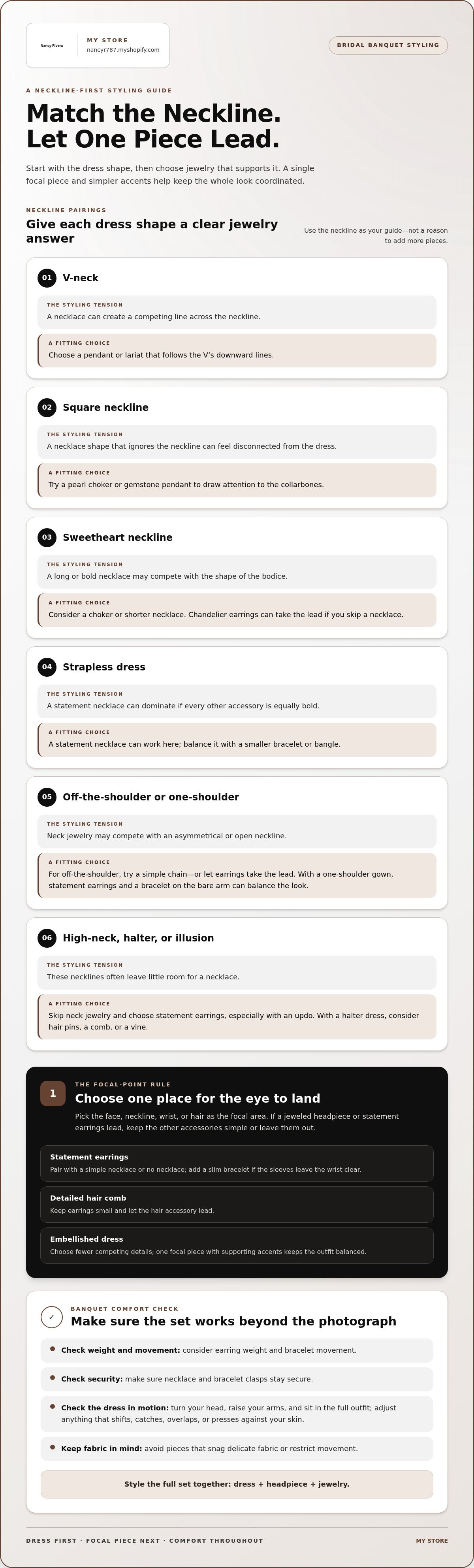
Comfort matters throughout a long banquet. Consider earring weight, bracelet movement, and whether necklace or bracelet clasps stay secure during greetings, dining, and dancing. Avoid pieces that snag delicate fabric or press against your skin when seated. Bridal jewelry for a banquet outfit should work with the dress throughout the event, not just in a posed photograph.
Necklace and Dress Neckline Pairings
Use the neckline to guide necklace shape and length. A V-neck can pair with a pendant or lariat that follows its downward lines. With a square neckline, a pearl choker or gemstone pendant draws attention to the collarbones. These pairings echo the dress shape instead of creating a competing line across it.
For a sweetheart neckline, consider a choker or shorter necklace. Chandelier earrings are an alternative if you skip a necklace. A strapless dress can carry a statement necklace, balanced by a smaller bracelet or bangle. An off-the-shoulder dress can suit a simple chain, though earrings often work better than a necklace with off-the-shoulder or one-shoulder gowns.
High-neck, halter, and illusion dresses often leave little room for a necklace. Skip neck jewelry and choose statement earrings, particularly with an updo, or try hair pins, combs, or vines with a halter dress. Check how a necklace sits against the actual neckline, not just the garment on a hanger.
Balancing Jewelry and Headpieces
Balance the full set by choosing one focal area: face, neckline, wrist, or hair. If a jeweled headpiece already draws attention, choose simpler earrings and skip a competing necklace. With a clean neckline and an updo, drop earrings add movement; sparkling studs offer a quieter finish.
Pair statement earrings with a simple necklace or no necklace, then add a slim bracelet if the sleeves leave your wrist clear. With a detailed hair comb, keep earrings small and let the hair accessory lead. The pieces can feel coordinated without matching in design or metal.
Before the event, try on the dress, headpiece, earrings, necklace, and bracelet together. Turn your head, raise your arms, and sit as you would during the banquet. Adjust any piece that shifts, catches on fabric, or overlaps another accessory. One statement piece with supporting accents creates a practical balance for photographs and movement.
Styling jewelry for different wedding themes and venues
Use the venue, dress code, and event schedule to choose jewelry suited to the setting. Match the shine and detail to the occasion, then consider whether you can wear each piece again.
Jewelry for Formal and Casual Weddings
For a black-tie wedding or ballroom reception, classic diamond jewelry suits the formal setting. Pair a simple gown with diamond earrings, or choose one refined necklace if the neckline leaves room. For a cocktail celebration, statement earrings or colorful jewelry add a stronger accent. Keep the remaining accessories understated so the outfit has one clear focal point.
Casual ceremonies call for lighter combinations. Pair a sundress with a simple chain necklace and cuff bracelet, or add pearl earrings for a traditional detail without a formal look. Consider the venue as well as the dress code: an outdoor ceremony and an evening ballroom reception call for different levels of shine, scale, and comfort. Choose pieces suited to the full event, including movement and photographs.
Rent, borrow, or buy based on repeat use, sentimental value, and the pieces you already own. Borrowing can make sense for a one-time statement piece; buying is useful when you can wear the design again. Renting suits a temporary look when access matters more than keeping the jewelry.
Jewelry for Wedding-Week Events
Choose different accessory combinations for the rehearsal dinner, ceremony, and reception instead of repeating a full statement set at every event. A dinner outfit can take a simple chain and small earrings, while the wedding-day look carries a more noticeable focal piece. For a cocktail event, choose colorful jewelry or statement earrings that complement the outfit’s strongest color.
Pack jewelry by event and outfit. Keep each combination together with the earrings, necklace, or bracelet intended for that look. This organizes accessories across the wedding schedule and helps prevent pieces for a casual event from being mistaken for the ceremony set.
Bridal Jewelry Trends for Banquet Outfits
For 2026 banquet styling, consider classic diamond accents for formal venues, statement earrings for cocktail settings, and simple chains with cuffs for casual ceremonies. These are adaptable style directions, not a requirement to follow a trend. Diamond hoop earrings also offer a practical option for rewearing after the wedding day.
Choose a design that works with both the outfit and the occasion. Pearls can add a traditional detail; colorful jewelry can bring contrast to a neutral dress. For a coordinated banquet look, a bridal banquet jewelry set is one option to consider alongside individual accessories.
Choosing jewelry for embellished or simple dresses
Start with the dress’s details, color, and neckline. Then choose accessories that complement its strongest feature instead of competing with it.
Coordinating Accessories, Metals, and Gemstones
Match jewelry to visible dress embellishments: pearl earrings can echo pearl details, while diamond pieces can coordinate with sequins or crystals. For floral lace, pearls or diamond studs suit a vintage-inspired look; laser-cut lace can pair with oxidized silver and turquoise. Aim for a coordinated set of pieces, not identical accessories.
Use dress color to guide your choice of metal. Silver or platinum suits white or black gowns, gold works with ivory or champagne, and rose gold coordinates with blush. These pairings are a starting point, not a rule that every piece must match. Wedding jewelry does not need to match the engagement or wedding ring, either; mixing metals is an option.
With a simple dress, one statement piece can provide the main detail. Try diamond earrings with a clean gown or gold bangles against plain fabric. For a dress with crystals, keep the other pieces delicate so the embellishments stay visible. Compare each accessory beside the dress in similar lighting, since color and shine can look different indoors and outdoors.
Consider where the embellishments sit before choosing jewelry. Pearl details at the bodice can be echoed with pearl earrings, while a heavily decorated sleeve may already draw attention to the wrist. In that case, skip a bracelet or choose a slim design. With vintage-patterned lace, filigree or milgrain-inspired jewelry can complement the texture without repeating the exact motif.
Jewelry for Distinct Dress Necklines
Off-the-shoulder and one-shoulder dresses leave different areas open. Earrings are often a stronger choice than a necklace with either style; statement earrings and a bracelet on the bare arm can balance a one-shoulder silhouette. For an off-the-shoulder style, a simple chain is another option if it leaves the neckline uncluttered.
High-neck and halter dresses leave little need for neck jewelry. Skip the necklace and focus on statement earrings, or add hair pins, combs, or vines with a halter dress. Drop earrings add movement with an updo, while studs keep the look restrained. Choose based on the dress details and the focal point you want.
Check the full outfit while wearing it, not just each piece on its own. Put on the dress, earrings, and any headpiece, then see whether the jewelry overlaps lace, embroidery, or a raised neckline. A delicate necklace may disappear against a detailed bodice, while a large pendant can interrupt the clean line of a simple gown. Adjust the scale before settling on the set.
Use a simple sequence: identify the dress’s main detail, choose one accessory to echo it, then add only pieces that support the same look. For example, pair crystal embellishments with diamond jewelry and keep bracelets understated. If the dress has minimal decoration, a single bold piece can provide contrast. This keeps the look coordinated without requiring every accessory to come from the same collection.
Bridal jewelry price examples
Compare jewelry prices by item type, material, design details, and what the set contains. A silver pendant necklace is not directly comparable to a coordinated set of earrings, necklace, and bracelet. For a bridal banquet, first decide which pieces complete the outfit, then compare similar designs and materials. This keeps the comparison relevant to the dress.
Material and visible details shape the comparison. A simple chain and a detailed choker have different designs, while gemstone accents add another feature to assess. For example, compare two pendant necklaces with similar silhouettes, then note differences in metal, stone, finish, and included pieces. This gives you a clearer basis for judging whether the price reflects the piece you want.
The set’s contents matter, too. One jewelry set may include coordinated earrings and a necklace; another may add a bracelet. Compare the individual pieces and their visual role, not just the word “set.” If the gown already has beadwork, a simpler set may meet your styling needs without adding pieces you won’t wear.
- Single pendant: Compare chain material, pendant design, gemstone details, and clasp construction.
- Choker: Review the band or chain design, surface embellishments, and how it sits with the neckline.
- Coordinated set: Count the included pieces and compare their design details with the outfit.
- Statement earrings: Consider the scale, finish, and decorative elements alongside the hairstyle.
Color offers another useful comparison. Silver, gold, and rose gold create different effects against white, ivory, champagne, and blush dresses. Check the metal tone beside the fabric, then compare pieces with similar finishes. A timeless design may be easier to wear again, while a highly detailed piece can serve as the main bridal accent.
Before choosing, make a short comparison list: item type, material, included pieces, design detail, and intended use after the wedding. For example, compare a silver pendant for repeated wear with an ornate choker intended for one banquet outfit. Value depends on fit, construction, and future use, not simply the number of accessories in a set.
What jewelry should a bride wear with a heavily embellished banquet outfit?
For a heavily embellished banquet outfit, choose one focal jewelry piece and keep supporting accessories restrained. The dress already supplies visual detail, so use its neckline, embroidery, beadwork, and color to guide your choices. A pearl-embroidered bodice, for example, can guide your choice of earrings without requiring a full matching set.
Start with the dress’s most prominent feature. If crystals cover the neckline, avoid a necklace that competes with that area. Choose earrings or a slim bracelet instead. If the embroidery is concentrated at the waist or skirt, the neckline may leave room for a pendant or simple chain. Place jewelry where the dress has less visual detail.
Use the embellishment material as a coordination cue, not a rule to copy every detail. Pearl accents can pair with pearl earrings; sequins or crystals can work alongside diamond jewelry. For floral lace, pearl accents or diamond studs suit a vintage-inspired look. With laser-cut lace, oxidized silver and turquoise offer a contrasting option. Keep competing focal points to a minimum.
- Beaded neckline: Skip a necklace; select earrings with a smaller profile.
- Pearl bodice: Echo the pearls in earrings, then leave the wrist simple.
- Crystal detailing: Choose one crystal or diamond accent away from the busiest area.
- Embellished sleeves: Avoid bracelets that catch on the fabric.
Next, account for the dress shape and hairstyle. With a high-neck or halter outfit, leave the neck clear and choose earrings or a hair comb. An updo makes drop earrings more visible, while studs offer a quieter detail. For a one-shoulder dress, earrings can balance the exposed shoulder; a bracelet can work on the bare arm if it doesn’t compete with sleeve decoration.
Check the complete banquet look in the actual outfit. Put on the dress, veil or headpiece, and chosen jewelry together. Sit, raise your arms, and turn your head to see whether pieces shift, snag, or overlap the embroidery. If a hair vine and statement earrings both draw attention, remove one focal piece. This fitting step helps keep the look clear and comfortable throughout the event.
For a coordinated option, browse banquet jewelry set options and compare the pieces with the outfit’s embellishments before choosing.
MY STORE: 2026 Men S Fashion Waffle Knit Ribbed Sleeve V Neck Short Sleeve T Shirt For Daily Commuting And Casual Wear
MY STORE offers the AAA jewelry chain, bridal banquet, dinner Jewelry Set for readers choosing accessories for a wedding banquet. Compare the coordinated set with your outfit’s neckline, embellishments, and overall level of detail. It’s a relevant option when you want bridal banquet jewelry rather than clothing or unrelated accessories.
For a simpler clothing option alongside event planning, the catalog also includes Arrival Versatile Off-shoulder Knit Womens Wear. Keep the jewelry and garment decisions separate: choose accessories for the banquet outfit, then select clothing for other occasions based on its intended use.
Visit MY STORE’s jewelry and clothing catalog to view the available options.
Plan the Final Outfit Check
Before settling on bridal jewelry for a banquet outfit, view the complete look together instead of judging each accessory separately. Lay out the dress, shoes, hair accessory, and jewelry, then check whether one detail draws more attention than the others. This final edit can reveal an accessory that feels unnecessary or a gap that needs a simple finishing piece.
Consider the practical setting, too. Check the jewelry with the outfit while seated and standing, and note whether clasps, edges, or moving pieces catch on fabric. A comfortable combination should suit the ceremony and remain manageable throughout the banquet. Keep the selected pieces together to make getting dressed on the day straightforward.
If you’re ready to review a jewelry option for your look, contact MY STORE about bridal jewelry. Use the dress neckline, embellishments, and preferred level of detail to guide your choice. A considered final selection can make the outfit feel complete while keeping the accessories aligned with your style.
Frequently Asked Questions
What makes the best bridal jewelry?
The best bridal jewelry suits the wearer, outfit, and full event schedule. Try each piece with the dress, then test its clasp and movement. Consider whether the earrings stay comfortable during conversation and whether the necklace shifts when you bend. A piece that stays secure through ordinary movement is more practical than one chosen only for a still photograph.
What bridal jewelry styles pair well with a banquet outfit?
Choose styles that fit the banquet’s formality and the outfit’s visual weight. A coordinated necklace-and-earring set can suit a simple dress, while a single pair of statement earrings can work with a detailed outfit. For a reception look you can wear again, consider classic hoops or a pendant that also suits other formal clothing. The goal is a clear focal point, not a matching set at all costs.
How to match bridal jewelry to a banquet outfit neckline?
Trace the neckline’s shape before selecting a necklace. A V-shaped opening can work with a pendant that follows its angle, while a broad neckline may leave space for a short necklace. Try the necklace against the actual dress while standing and sitting. If the chain disappears beneath the fabric or rests awkwardly against the edge, choose earrings or a bracelet instead.
Which jewelry metals and colors suit different banquet outfit colors?
Silver or platinum can complement white and black outfits, while gold pairs with ivory or champagne. Rose gold coordinates with blush. For a patterned or multicolored outfit, use one of its quieter shades as your accessory reference instead of matching every color. A fabric swatch beside the jewelry can help compare undertones under the venue’s lighting.
Should bridal jewelry match the outfit embroidery, embellishments, or accessories?
Coordinate jewelry with one visible detail, but avoid copying every element. For example, echo pearl embroidery with pearl earrings, then choose a plain bracelet instead of adding more pearl accents. If shoes or a clutch already provide strong color, keep the jewelry simple. This connects the accessories while preserving contrast and keeping the outfit’s embroidery visible.
How much does bridal jewelry for a banquet outfit cost in the United States?
Cost depends on the jewelry type, materials, design details, and whether you choose a piece or a set. These are specific item prices, not a general market average; compare pieces with similar materials and contents.