

Wedding-day jewelry should complement the dress, not compete with it. A bridal jewelry set usually pairs a necklace with earrings; some sets also include a bracelet or hairpiece. Cubic zirconia offers crystal-like sparkle, while pearls and different metal finishes create other looks.
Choosing pieces together can help balance the dress neckline, hairstyle, and preferred level of shine. A coordinated set is one option, but the right combination depends on how each piece sits with the outfit.
Learn how to compare earrings, necklaces and bracelets, and how pearls, cubic zirconia and metal tones affect the overall look. This guide also covers dress-first styling and practical ways to choose jewelry that feels balanced for the occasion.
Key Takeaways
- Compare pearls, pavé crystals, and blue accents by the visual effect you want alongside your dress.
- Choose earrings, a necklace, and any bracelet as a coordinated group, with the neckline and hairstyle guiding the balance.
- Use gold, rose gold, or silver tones to create a consistent finish across your wedding-day accessories.
- Adjust jewelry scale and sparkle to suit the wedding occasion, outfit details, and overall styling.
- Consider cubic zirconia when you want crystal-like brilliance, and compare its shape and setting with your dress design.
Pearls, pavé crystals, and Something Blue jewelry
Pearls, crystals, and blue accents create distinct looks against a wedding dress. Compare color, surface details, and placement before choosing your pieces.
Customization and rental depend on the seller’s stated options. Choose a ready-made set as presented, without assuming it can be customized or rented.
Pearl and Gemstone Designs
Pearl and gemstone designs combine rounded pearls with colored or clear stones. Compare each element with your dress fabric, neckline, and other accessories. For example, a single pearl strand creates a different visual balance from a necklace with a central gemstone. Colored pearls also affect the palette: ivory tones coordinate with light fabrics, while darker shades add contrast. Choose one dominant feature, then keep the remaining pieces visually consistent.
Pearl and Crystal Sets
Pearl and crystal sets pair the smooth surface of pearls with the brighter reflections of crystals. Compare the proportion of each material rather than assuming every mixed design is equally balanced. A pearl necklace with small crystal accents looks different from crystal-heavy earrings paired with a simple pearl strand. View the set together in the same lighting, then compare its shine with dress details such as beading or embroidery.
Pavé describes a close arrangement of small stones across a jewelry surface. In earrings or a pendant, this detail can add repeated points of sparkle. Compare pavé pieces with the dress embellishment: a heavily decorated bodice may suit simpler jewelry, while a plain neckline can accommodate more visible stonework. Crystal and cubic zirconia designs both offer clear, reflective accents. Check the stone shape, setting, and overall scale before choosing a necklace and earrings.
For Something Blue styling, use blue as a deliberate accent rather than adding color everywhere. A blue stone in one pendant, a small blue detail in earrings, or a blue accessory can establish the theme. Keep other jewelry in a related metal tone so the accent stands out. Compare pale blue and deeper shades against the dress and bouquet colors. Place the blue item near the face or neckline if you want it to remain visible in portraits.
Colored pearl jewelry offers another way to introduce color without relying on a bright gemstone. Compare pearl shade, size, and finish with the dress and any crystal accents. A soft-colored pearl strand creates a subtle accent; stronger colors add contrast. Lay out the necklace, earrings, and bracelet together before getting dressed. Remove pieces that compete for attention, especially when pavé details, pearls, and blue stones appear in one collection. A balanced bridal jewelry set coordinates its materials while letting one detail lead.
Wedding-day earrings, necklaces, and bracelets
Most bridal jewelry sets pair a necklace with earrings; some also include a bracelet or hairpiece. Choose a full set for a coordinated design, or select individual pieces when specific proportions or styling needs matter more.
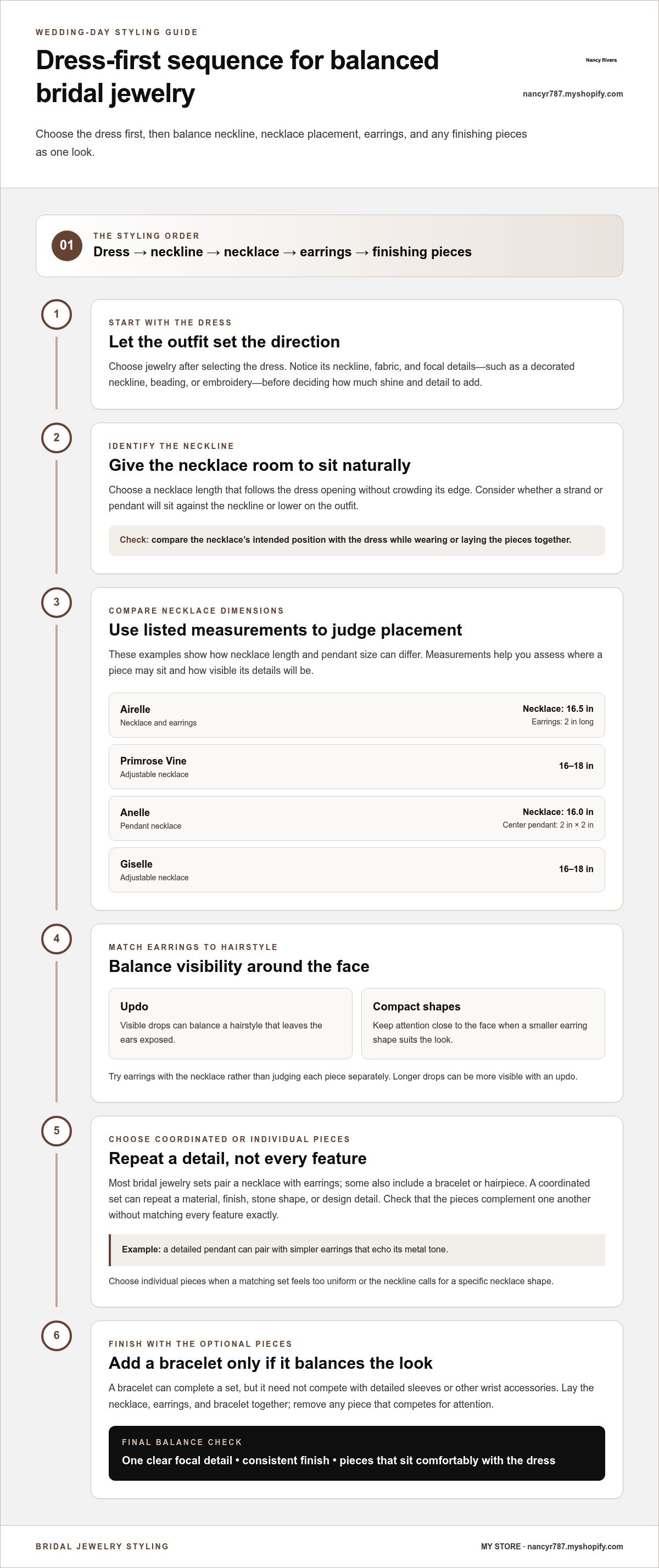
Start with the dress, then compare jewelry length, shape, and scale together. Choose jewelry after selecting the dress so you can style the pieces with it.
Necklace Length and Earring Shape
Necklace length determines where a pendant or strand sits against the neckline. Choose a length that follows the dress opening without crowding its edge. Then compare earring shape with the hairstyle: visible drops can balance an updo, while compact shapes keep attention near the face. Try the necklace and earrings together rather than judging them as separate accessories.
Coordinated Necklace and Earring Sets
A coordinated set usually repeats a material, finish, stone shape, or design detail across both pieces. Check that the earrings complement the necklace without matching every feature exactly. For example, a detailed pendant can pair with simpler earrings that echo its metal tone. A set can also simplify selection when the dress has a clear focal detail, such as a decorated neckline.
Necklace and Earring Dimensions
Compare listed measurements with the intended position on the body. The Airelle necklace measures 16.5 inches long, and its earrings measure 2 inches long. The Primrose Vine necklace adjusts from 16 to 18 inches long. These measurements help distinguish a close-fitting necklace from one that sits lower.
The Anelle necklace measures 16.0 inches long, with a center pendant 2 inches long and 2 inches wide. The Giselle necklace adjusts from 16 to 18 inches long. Use those dimensions to assess pendant visibility and necklace placement against the dress. Earring length also matters: longer drops can be more visible with an updo.
Full Sets or Individual Pieces
Choose a full set when the necklace and earrings share a finish and design style that suits the dress. Individual pieces may work better when a matching set feels too uniform or the neckline calls for a specific necklace shape. A bracelet can complete a set, but it need not compete with detailed sleeves or other wrist accessories.
Use this order: choose the dress, identify its neckline, then compare necklace lengths and earring shapes. Add a bracelet only if it balances the other pieces. Reviewing coordinated bridal jewelry options alongside individual pieces can help clarify which approach fits the outfit.
Gold-, rose gold-, and silver-plated jewelry
Gold, rose gold, and silver finishes change how jewelry looks with a wedding outfit. Compare the metal tone with dress details, other accessories, and the color of any stones.
The best metal and gemstones depend on the look you want and the dress details. Gold, rose gold, or silver can each work with pearls, clear crystals, or cubic zirconia when the pieces share a consistent finish.
Silver creates a cool-toned finish that pairs with clear stones and white pearls. It can also coordinate with silver details on a dress, such as beading or embroidery. For example, silver earrings and a pendant can echo the finish of a gown’s neckline embellishment. Choose a consistent tone across the necklace, earrings, and bracelet for a unified look.
Gold gives jewelry a warmer appearance, while rose gold adds a pink-toned option. Compare each finish beside the dress rather than relying on its appearance alone. Warm ivory fabric, champagne details, and gold accessories can create a coordinated palette. Rose gold can provide a distinct accent, especially when other jewelry and dress details remain simple.
Gold and silver jewelry can be worn together, but the combination needs a visible connection. A two-tone necklace, for example, can link gold earrings with a silver bracelet. Without a shared detail, mixed finishes may look disconnected. Select one dominant metal, then use the second tone in a smaller piece or repeated design detail.
Gemstone color also affects the overall balance. Clear cubic zirconia or crystal works with silver, gold, and rose gold settings. A blue stone adds a color accent, while pearls provide a softer surface beside reflective stones. Match the setting to the metal tone, then compare the stone color with dress embellishments and other accessories.
Plated jewelry has a surface finish over a base material, so consider both when comparing pieces. Product descriptions can identify the stated finish and material; use those details to distinguish gold-plated, rose-gold-plated, and silver-plated designs. Don’t assume that two pieces with similar colors have the same composition. Compare the full set’s finish in consistent lighting before choosing.
Use this simple selection sequence: identify the dress’s dominant tone, choose a metal finish, then select stones that support it. For example, silver with clear cubic zirconia creates a cool, bright combination. Gold with ivory pearls gives a warmer effect. A bridal jewelry set looks more coordinated when its metal tones and gemstone colors repeat across each piece.
Jewelry styling for wedding occasions
Match jewelry to the dress by considering its neckline, fabric, and embellishment, then choose pieces that balance those details. Your engagement ring and wedding band don’t need to have exact matching finishes; repeat one metal tone or design detail to connect them.
Matching Jewelry to Dress and Neckline
Use the dress neckline as the starting point for necklace placement. A pendant can fill an open neckline, while a necklace that follows a high neckline may compete with its shape. With a strapless dress, earrings can provide a clear focal point. Compare cubic zirconia with the gown’s beading, then choose matching sparkle or simpler accents.
Coordinating Rings and Jewelry
Engagement rings and wedding bands can guide the metal tone for other wedding jewelry. Repeat the ring’s finish in earrings or a bracelet for a coordinated look. Mixed metals can also work when one detail connects them, such as a two-tone design. Keep larger stones near the hands from competing with prominent necklace or earring details.
Cubic zirconia suits wedding styling when clear, reflective stones fit the dress and occasion. A cubic zirconia pendant can add sparkle to a simple neckline; smaller stones can complement an embellished bodice. Compare the stone size with the dress details and ring setting. For a balanced look, make one area the focus, such as the neckline or ears.
Wedding guest jewelry calls for a different balance from bridal styling. Choose earrings, a necklace, or a bracelet that complements the outfit without copying the couple’s coordinated bridal look. For example, a guest wearing a patterned dress can choose one simple metal accessory. At a formal evening wedding, a small crystal accent can add detail without overpowering the outfit.
Wedding bands remain visible throughout the ceremony and reception, so consider comfort and how they sit beside the engagement ring. Try the rings with any bracelet or hand accessory planned for the day. Avoid adding a competing statement piece near the hands when the ring setting already draws attention. A consistent metal tone can connect the rings with other jewelry.
Review the seller’s return terms before ordering wedding jewelry, especially when comparing several designs or sizes. Keep the order details and original packaging together until you’ve tried the pieces with the outfit. This helps preserve the items while you assess their fit and appearance. Leave time between delivery and the wedding for outfit styling and any return window stated by the seller.
For a final styling check, wear the complete outfit with the selected jewelry. View the neckline, ears, hands, and wrists together in the same mirror. Remove a piece if the necklace, earrings, rings, and bracelet all compete for attention. This outfit test helps keep wedding jewelry coordinated across the ceremony and reception.
Cubic zirconia bridal jewelry
Cubic zirconia gives wedding accessories a clear, reflective accent. Its appearance depends on stone shape, setting, and placement. Compare those details with the dress before selecting earrings, a necklace, or a bracelet. A pear-shaped pendant creates a different focal point from small round stones set across a band. Choose the option that best supports the outfit’s existing details.
Start with the dress. A plain neckline can accommodate a more prominent cubic zirconia pendant, while an embellished bodice may call for smaller stones. For example, pair a simple satin neckline with a pendant and understated earrings. If the dress already has beadwork, choose one jewelry focal point rather than repeating the detail everywhere.
Stone shape changes the visual effect. Round stones create a familiar, balanced look; teardrop shapes draw the eye downward. Square or rectangular stones introduce sharper lines beside a structured neckline. Compare the main stone with the dress silhouette, then check how smaller stones repeat its shape across the earrings or bracelet.
Settings also affect how a piece looks. A single center stone concentrates attention, while a row of smaller stones spreads sparkle across a necklace or earring. Look at the front and side profiles when comparing options. A low-profile design can sit closer to the body; a raised setting gives the stone more visual prominence.
Use a practical pairing sequence. First, choose one focal piece, such as a pendant or drop earrings. Next, select supporting accessories with similar stone shapes or metal finishes. Finally, wear the full combination with the wedding dress. If both the earrings and necklace have large stones, remove one piece and reassess the overall balance.
Cubic zirconia can coordinate with pearls, colored stones, or a simple metal finish. A clear pendant beside pearl earrings combines reflective and soft surfaces. A blue accent can add color without changing the main stone palette. Limit competing details, especially with a dress that already includes crystals, lace, or embroidery.
Review the complete set under the lighting you’ll use to prepare your outfit. Natural daylight and indoor lighting can change how reflective surfaces appear. Check whether the stones remain visible against the dress and whether the earrings show clearly with your planned hairstyle. These steps help you assess the full combination rather than judging each piece separately.
For a coordinated option, browse bridal jewelry sets and compare stone shape, setting, and piece proportions with your dress.
MY STORE: 2026 Men S Fashion Waffle Knit Ribbed Sleeve V Neck Short Sleeve T Shirt For Daily Commuting And Casual Wear
MY STORE offers an AAA jewelry chain, bridal banquet, dinner Jewelry Set for readers comparing wedding-day jewelry options. Consider it when you want a coordinated jewelry choice for a bridal banquet or dinner. The listed range also includes the Arrival Versatile Off-shoulder Knit Womens Wear, ARTIE Men's Wear, and the 2026 Men S Fashion Waffle Knit Ribbed Sleeve V Neck Short Sleeve T Shirt For Daily Commuting And Casual Wear.
Use the styling points in this guide to compare a set with your dress neckline, preferred metal finish, and chosen accessories. Consider our AAA jewelry chain set for banquet and dinner occasions.
Visit nancyr787.myshopify.com to view the available offerings.
Make Your Final Jewelry Choice
Before settling on a bridal jewelry set, review the complete outfit with the selected accessories. Wear the pieces with your planned hairstyle and check how they sit while standing and sitting. This final test can reveal whether jewelry catches on fabric or shifts during movement. Adjust the combination to suit the day’s practical needs.
Consider which pieces you’ll wear through the ceremony and reception. A bridal jewelry set can coordinate the main accessories, but you can leave out pieces that don’t suit your outfit. Choose items that feel comfortable and work with the clothing planned for each part of the day.
For a jewelry option suited to bridal banquets and dinners, contact MY STORE about bridal jewelry. Review your outfit, identify the details you want to emphasize, and make your selection with the full look in view.
Frequently Asked Questions
What jewelry should I wear on my wedding day?
Choose pieces that suit the ceremony, outfit, and comfort needs, rather than wearing every accessory. A bridal jewelry set can coordinate key pieces, while individual items let you choose details to suit your outfit. Try earrings with your planned hairstyle and check necklaces while sitting and standing. If you’ll change outfits, choose versatile pieces that work with both looks.
What bridal jewelry is appropriate for different wedding traditions and dress codes?
Follow the invitation’s dress code and any guidance from the couple or ceremony hosts. Traditions vary, so don’t assume a color, symbol, or jewelry style has the same meaning across communities. For a formal event, choose polished accessories that suit the outfit. For a cultural ceremony, consider whether particular colors or symbols carry significance, and keep the styling respectful.
How should I care for and store bridal jewelry?
Store each piece of a bridal jewelry set separately in a soft pouch or lined compartment to reduce tangling and surface contact. Fasten necklace clasps and wipe away makeup or visible residue with a soft, dry cloth before storage. Keep jewelry away from damp areas and direct contact with sprays or cosmetics. Store earrings together, with small components in a closed compartment.
What styles of bridal jewelry sets are popular in the United States?
Styles include pearl and gemstone designs, pearl-and-crystal or pavé sets, Something Blue accents, and cubic zirconia pieces. Sets often pair a necklace with earrings in gold, rose gold, or silver tones.
How much do bridal jewelry sets cost?
Prices for a bridal jewelry set at MY STORE vary based on materials, gemstone types, and craftsmanship. Options range from affordable fashion-forward pieces to fine jewelry collections, ensuring every bride can find a coordinated set that fits her budget and wedding style.