

For 2026, men's business casual commuter wardrobe essentials start with well-fitting, polished basics in neutral colors, balanced with comfortable layers for the commute. A capsule wardrobe can contain 30 to 35 pieces, adjusted for climate and lifestyle. The aim: look office-ready without relying on formalwear for every workday.
Comfort matters on the way to work, but gymwear and distressed denim can undermine a polished office outfit. Fit, clean lines, and versatile pieces help bridge commuting, hybrid schedules, and workplace expectations.
This guide explains what business casual means for men and how to build outfits for standard office days, meetings, and casual Fridays. It covers chinos and other smart pants, commuter-friendly shirts and layers, and practical ways to keep each outfit comfortable and presentable.
Key Takeaways
- Build work outfits around chinos or smart trousers, then choose shirts and layers that suit the day’s setting.
- Use dark, clean, structured jeans only where workplace norms allow; skip distressed denim and gymwear for standard office days.
- Pair comfortable commute layers with polished indoor basics, so temperature changes don’t leave the outfit looking unfinished.
- Adjust formality by occasion: keep everyday office outfits simple, and add a dress shirt or blazer for presentations and client meetings.
1. What is Business Casual for Men?
Business casual pairs office-appropriate clothing with less formality than a suit. A button-down shirt, chinos, and clean shoes make a dependable work outfit. Prioritize fit and a tidy appearance over seasonal trends. For a versatile base, coordinate neutral colors such as black, white, gray, navy, and khaki across shirts, trousers, and outer layers.
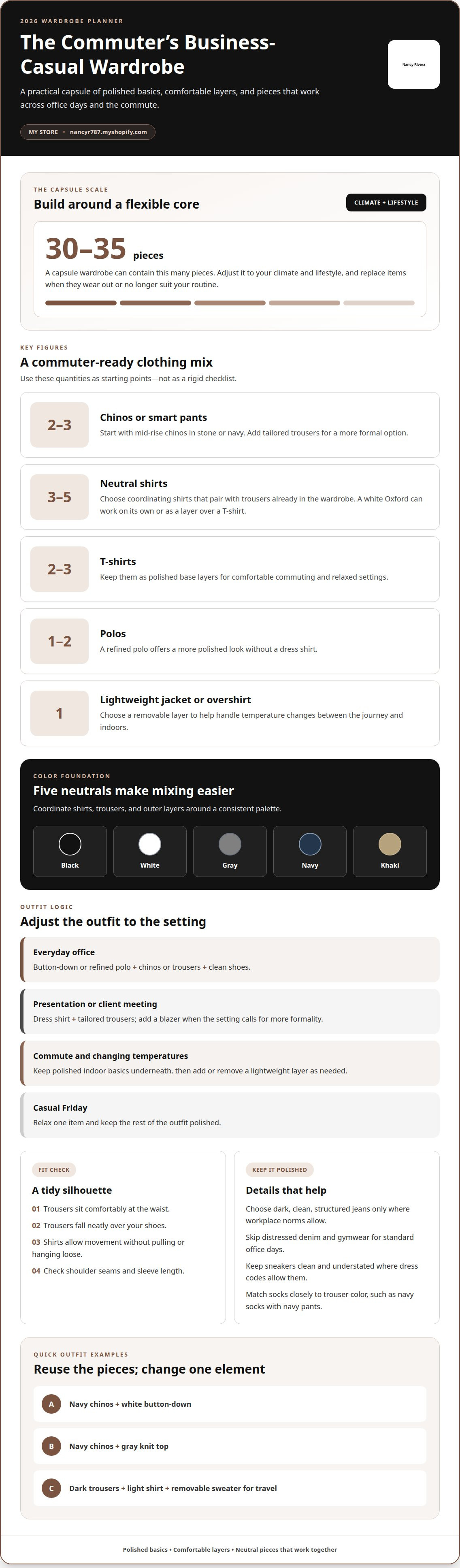
A capsule wardrobe can contain 30 to 35 pieces, adjusted for climate and lifestyle. Start with neutral trousers and shirts, then add knitwear or a jacket for changing temperatures. For example, navy chinos pair with a white button-down on one day, then a gray knit top on another. A white Oxford shirt can serve as an everyday work shirt, dress up for formal occasions, or layer open over a T-shirt. Replace pieces when worn out or no longer suited to your routine, rather than simply following trends.
For the workweek, change one element at a time: wear a button-down with chinos one day, a refined polo with tailored pants another, then add a knit layer over a collared shirt. Keep the other colors consistent to make combinations easier. For travel, pack pieces that work together, such as dark trousers, a light shirt, and a removable sweater. A clean, structured outfit can take you from commute to office without a full change.
For an interview or conference, choose a dress shirt and tailored trousers; add a blazer when the setting calls for more formality. A presentation outfit benefits from a pressed shirt and restrained colors, while everyday business-casual outfits can use a polo or knit top. The best-value men’s business-casual clothing brands in the United States in 2026 depend on fit, versatility, and how often their pieces work across settings. Compare those factors rather than relying on a brand name alone.
2. Smart chinos, tailored pants, and minimal joggers
A minimal business-casual wardrobe can include 2-3 chinos or smart pants. Start with mid-rise chinos in stone or navy. These shades coordinate with white, light-blue, gray, and patterned shirts. Cotton chinos suit everyday commuting and office wear. Choose a clean front and restrained details for a dressed appearance. A button-down shirt and leather shoes can elevate the same pair. Keep the fit comfortable when seated, standing, and walking.
Add variety with dark-wash jeans and tailored trousers. Dark, clean, non-distressed jeans can work for business casual if they look structured. Pair them with a collared shirt rather than a gym-style top. Tailored trousers are a more formal choice for presentations or stricter dress codes. Chinos and dress trousers also suit different settings without requiring a full outfit change. Check your office dress code before wearing jeans or joggers, and keep the rest of the outfit polished.
Minimal joggers can suit remote work or a commute when the dress code allows them. Choose a plain, streamlined pair and combine it with a neat shirt or knit top. Joggers are not a substitute for dress trousers at a formal meeting. For a standard office day, avoid gymwear and distressed denim. Reserve joggers for relaxed settings, or change into chinos before going into the office.
For breathable work clothes, linen and stretch cotton are useful options. Wrinkle resistance depends on a fabric's construction and finish, so weigh both needs when choosing trousers. Lightweight button-ups and stretch-cotton shirts pair well with chinos for long days. A crease-resistant finish may help clothes look neater after travel, but results also depend on the fabric blend and care instructions. Pack trousers along their seams to help reduce creasing. Choose coordinating pieces and rotate them across workdays to get more outfits from a small selection.
3. Fit and presentation for business casual dressing
Fit determines whether an outfit looks polished or overly relaxed. Choose trousers that sit comfortably at the waist and fall neatly over your shoes. Your shirt should allow movement without pulling across the chest or hanging loose at the sides. Before leaving, check the shoulder seams and sleeve length. A collared shirt under a lightweight sweater adds structure without the formality of a suit. Keep the overall silhouette neat for both the commute and the office.
Business casual falls between formal businesswear and casual clothing. A suit and tie suit more formal dress codes, while jeans and a T-shirt usually look more casual. For an ordinary office day, pair a button-down or refined polo with chinos or trousers. For a client meeting, choose a dress shirt and tailored trousers, adding a blazer if the setting calls for one. On casual Friday, relax one item and keep the rest polished.
Match your outfit to the workplace. In a traditional office, dark trousers, a collared shirt, and black or brown dress shoes make a conservative combination. A creative workplace may allow a simple knit top, clean pants, and minimalist sneakers. Hybrid settings often call for an outfit that looks presentable on camera and stays comfortable during the commute. Leather boots are another versatile option for cooler weather.
Choose footwear that matches the outfit's formality. A mid-brown penny or bit loafer works with casual dress trousers and chinos. Minimalist sneakers can suit relaxed workplaces when they are clean and understated. For presentations, dress shoes give a more formal finish. Keep socks dark and close to your trousers' color, such as navy socks with navy pants. These details connect the outfit from shirt to shoes without distracting contrast.
4. Business casual essentials for hybrid work and commuting
A hybrid wardrobe needs pieces that work at home, on transit, and in the office. Start with 3-5 neutral shirts, 2-3 T-shirts, and one lightweight jacket or overshirt. Add one or two polos for days that need a polished look without a dress shirt. A list of 2026 men's business casual commuter wardrobe essentials should account for both indoor comfort and the journey to work. Choose colors that coordinate with trousers already in rotation, creating more combinations from fewer pieces.
The cost of a men's commuter capsule wardrobe depends on the pieces you choose, their materials, and whether you include shoes or outerwear. Build it gradually: prioritize the shirts and trousers you wear most, then add layers for your climate and routine. Plan your spending around the gaps that affect your regular outfits first.
For rain, snow, or changing temperatures, start with a complete indoor outfit, then add removable layers and suitable outerwear. For a fall commute, wear a shirt and trousers with a sweater under an all-weather coat, removing the extra layer indoors. In colder conditions, a topcoat is another option. Dark, mid-calf socks in a color close to your trousers keep the outfit visually consistent.
Versatile commuter outfits include chinos, a button-down, and a lightweight sweater, or clean trousers with a polo and jacket. A neutral T-shirt under an overshirt suits a relaxed office, while dress shirts work for more formal settings. For a presentation, add a blazer and dress shoes. These 2026 men's business casual commuter wardrobe essentials can also help create outfits that transition from transit to office meetings.
Carry work essentials in a clean, structured bag sized for the day. A laptop sleeve, notebook, charger, and compact umbrella cover common office and weather needs. Keep keys and transit cards in an easy-to-reach pocket. Match a simple bag and belt to the outfit’s palette. Shop the commuter waffle-knit T-shirt for a casual base option.
MY STORE: 2026 Men S Fashion Waffle Knit Ribbed Sleeve V Neck Short Sleeve T Shirt For Daily Commuting And Casual Wear
MY STORE offers the 2026 Men S Fashion Waffle Knit Ribbed Sleeve V Neck Short Sleeve T Shirt For Daily Commuting And Casual Wear. It suits a commute or relaxed workday when a T-shirt fits the office dress code. Pair it with chinos and clean shoes for a neat smart-casual outfit, or layer it under a lightweight jacket for changing temperatures. The waffle-knit texture and V-neck design provide a casual alternative to a button-down, but a dress shirt is more suitable for formal meetings. Use this piece as one option within a broader work wardrobe, rather than as a replacement for every office top. Contact MY STORE for information about this commuting and casual-wear T-shirt.
Put Your Commuter Wardrobe Into Practice
Use the 2026 men's business casual commuter wardrobe essentials as a working framework, not a fixed uniform. Before your next workday, identify where an outfit needs more flexibility: a comfortable base for transit, a layer for changing temperatures, or a more formal option for meetings. Choose one adjustment, then assess how it works across your commute, workplace, and hybrid schedule.
Try assembling an outfit the evening before. Check that each piece suits the day’s plans, feels comfortable for the journey, and fits your workplace’s dress code. Note any practical gap, such as needing a casual top for a relaxed day. This focused approach can help refine your choices without chasing every seasonal trend. MY STORE’s waffle-knit V-neck T-shirt is one option for casual commuting. For questions about this item, contact MY STORE. Build around the pieces that serve your routine, and make your next workday outfit a considered choice.
Frequently Asked Questions
What is Business Casual for Men?
Business casual is a workplace dress level between formal suiting and relaxed everyday clothing. A collared shirt, chinos, and neat shoes can suit an ordinary office day without a tie. A graphic T-shirt and athletic shorts usually look more casual. Choose the combination based on the setting, the day's activities, and your workplace's expectations.
How many pieces should a men’s capsule wardrobe include in 2026?
A men’s capsule wardrobe can include 30 to 35 pieces, with the final count adjusted for climate and lifestyle. Count clothing, shoes, and outerwear together, then consider how often each item works across your weekly routine. A commuter in a cold climate may need different layers than someone working mostly from home in a mild climate.
Why does fit matter more than brand in a capsule wardrobe?
Fit affects how clothes look and move; a brand name alone does not guarantee either. A familiar shirt that pulls at the buttons or trousers that bunch at the ankles can throw off a coordinated outfit. Prioritize comfortable movement, clean lines, and balanced proportions. These checks help each piece work with more of the clothes you already own.
What are the essential pieces for a men's business casual commuter wardrobe in 2026?
Start with work trousers, neutral shirts, a few T-shirts, a knit layer, and practical outerwear. Add office-appropriate shoes and a belt. For commuting, consider how each piece works on transit, in indoor temperatures, and on video calls. Before making an item a wardrobe staple, see whether you can build several distinct workday outfits around it.
What business casual dress code rules apply to men in U.S. workplaces in 2026?
Business-casual expectations vary among U.S. employers, roles, and office settings, so one outfit formula will not fit every workplace. Follow the written dress code and note whether formality changes for client meetings, presentations, or casual days. If the guidance is broad, start with a collared shirt, clean trousers, and understated shoes. Save more relaxed pieces for settings that allow them.
How should men's business casual clothes fit and be tailored?
Choose clothes that allow normal movement without excess fabric or pulling. Shirt shoulders should sit at the edge of your shoulders, sleeves should finish neatly at the wrist, and trousers should stay secure at the waist when you sit. Hems should meet your shoes without dragging. Alterations can adjust length or reduce excess fabric while preserving room to commute and sit comfortably.