

A clothing and accessories shop online should make it easy to browse clothing by style and fit, then consider accessories that suit the same needs. The useful starting point is a clear view of product categories, garment details, sale items and accessory types.
Choosing clothing online involves more than picking a colour or silhouette. Size information and product details help narrow your options, while accessories let you complete a look. This guide explains how to browse these categories and decide which details matter.
Review clothing styles and fit information, explore sale listings, and compare accessory categories such as belts, caps and jewellery. Use those details to focus your search and move through the catalog with a clear idea of what you need.
Key Takeaways
- Browse clothing by category and style, then use garment details to narrow your selection.
- Assess fit needs by considering how body shape, height, and preferred clothing proportions affect your choices.
- Compare sale items by their listed price and product details to identify options that suit your requirements.
- Explore accessories such as belts, caps, and jewellery to add suitable finishing pieces to a clothing selection.
Clothing categories and styles
Start with the category that matches the item you need: tops, bottoms, dresses, outerwear, or coordinated sets. Then narrow the choice by silhouette and occasion. A V-neck tee suits casual outfits, while a structured blouse can work for office or event clothing. For each option, compare sleeve length, neckline, garment length, and closure. These details show how the item may sit with pieces already in your wardrobe.
Use product categories to narrow your search. Where filters are available, options such as size, color, garment type, and price can help you focus on relevant products. Set a budget first, then compare items within it by cut and listed details. Filters organize the catalog, but the product description still matters.
Read the product page before choosing a style. Check the size information and compare it with a garment that fits the way you prefer. Look for details such as a fitted or relaxed cut, stretch fabric, or a shorter or longer hem when the listing provides them. For example, pair a loose top with straight-leg trousers for a balanced outline, or wear a fitted top with a fuller skirt. These are coordination ideas, not rules.
What are the return and exchange policies for online clothing purchases? Policies vary by retailer and item. Before ordering, review eligibility, required item condition, return shipping, and whether an exchange or refund is available.
In a clothing and accessories shop online, product categories and filters can make browsing more focused. Choose a category, apply relevant filters where available, then compare items by fit information, silhouette, and occasion. This helps you assess whether a style also meets your practical needs.
Plus-size, petite, tall, and shape ranges
Size labels help organize clothing, but cut and proportions affect how a garment fits. Petite ranges commonly adjust proportions for shorter frames, while tall ranges allow more length in sleeves, tops, and trouser legs. Plus-size ranges offer additional sizing options, and some ranges account for differences in waist, hip, bust, or shoulder measurements. Use these labels to narrow your search, then compare the size chart.
Use a consistent method to take measurements before choosing a size. Compare your bust, waist, and hip measurements with the garment chart, then check inseam or sleeve length for trousers and jackets. A petite trouser cut may address leg length, while a tall option may offer a longer inseam. If your measurements correspond to different chart sizes, prioritize the area that needs the closest fit, such as the waist of fitted trousers.
- Petite: Compare rise, sleeve length, and overall garment proportions.
- Tall: Review inseam, sleeve, and torso length for coverage.
- Plus-size: Check garment measurements and cut, not only the label.
- Shape range: Match the chart to the areas that affect comfort and fit.
Price information can help organize options alongside size and fit details. Set a budget, then compare products with similar cuts and features. A lower listed price alone does not show whether a garment meets your needs. Fabric descriptions, construction details, and sizing information matter too. For example, compare straight-leg trousers by their listed fabric, waistband, and available lengths.
For online browsing, apply size or fit filters first, then refine by garment type and budget. Review the size chart on each product page because sizing can differ between cuts. To see clothing categories in context, browse clothing options and compare their available details.
A listed price tells you nothing about a garment’s measurements. Keep comparisons relevant to the item category, and use garment charts to assess apparel. This avoids treating a price or product title as evidence of cut, length, or fit.
Sale clothing and accessories
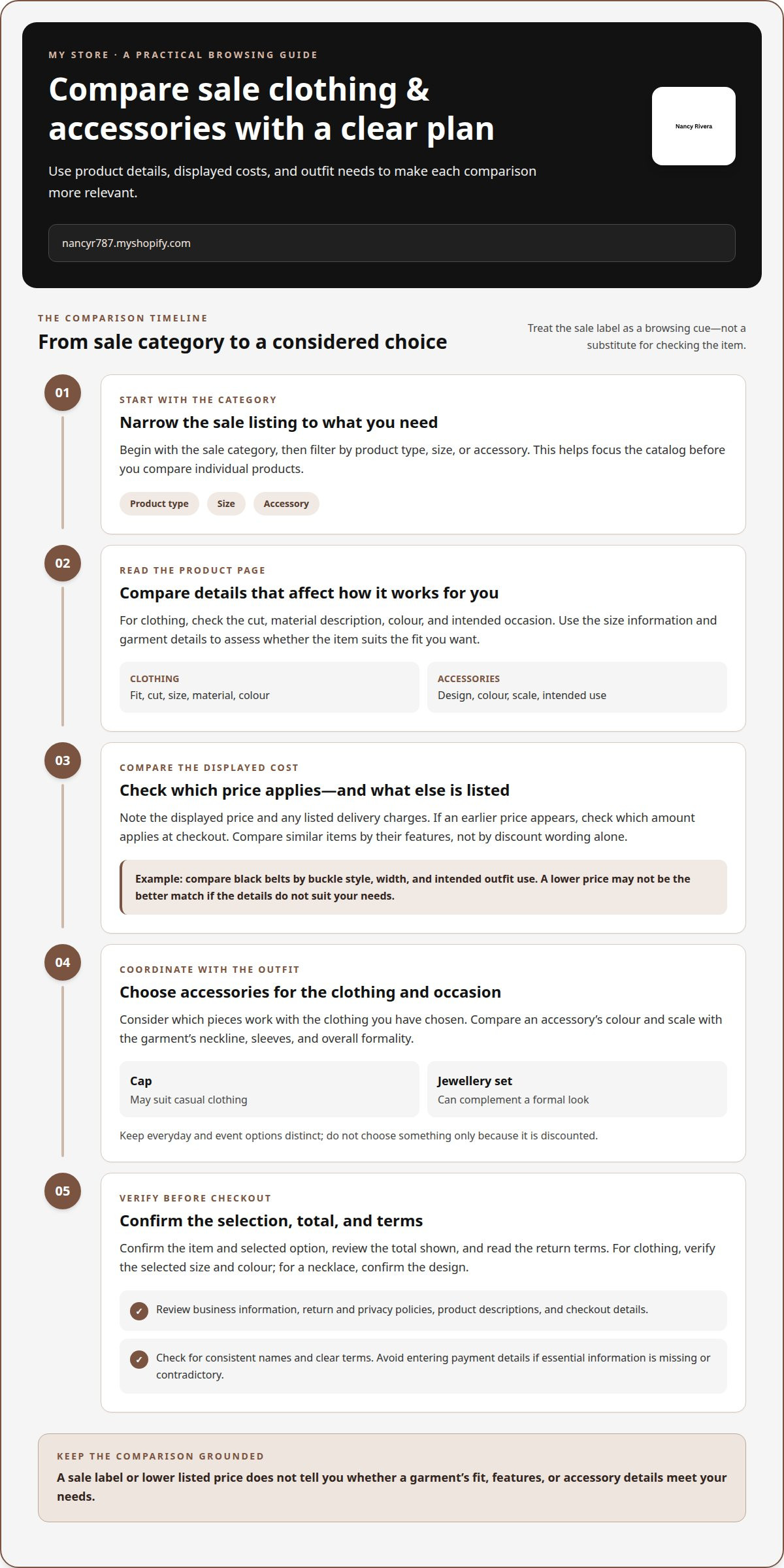
Start with the sale category, then filter by product type, size, or accessory. Open each product page and compare its current listed price with the details that affect use: cut, material description, colour, and intended occasion. A reduced top still needs to suit the desired fit; a necklace still needs to match the outfit and event. Treat the sale label as a browsing cue, not a substitute for comparing product information.
Note the displayed price and any listed delivery charges when comparing products. If a page shows an earlier price, check which amount applies at checkout. Compare similar items by their features, not wording about discounts. For example, assess black belts by buckle style, width, and intended outfit use. A lower price may not be the better match if the listed details do not suit your needs.
Accessories can help complete an outfit. A cap may suit casual clothing, while a jewelry set can complement a formal look. Browse by category, then consider which pieces work with the clothing you have chosen. Compare an accessory’s color and scale with the garment’s neckline, sleeves, and overall formality. Keep everyday and event options distinct rather than buying something just because it is discounted.
How can shoppers assess whether an online clothing and accessories store is legitimate? Review its business information, return and privacy policies, product descriptions, and checkout details before ordering. Look for consistent names and clear terms across the site, and avoid entering payment details if essential information is missing or contradictory.
Before checkout, confirm the item and selected option, review the total shown, and read the return terms. For a top, verify the selected size and color; for a necklace, confirm the design. This keeps your decision focused on the product, its displayed cost, and the conditions attached to the order.
Accessories, bags, and jewellery
Coordinate accessories by function, scale, and outfit details. A structured bag can complement tailored clothing, while a compact crossbody can suit a casual outfit. Match the bag’s shape to the clothing’s silhouette rather than matching every color exactly. A neutral bag can balance a patterned outfit, while a colored bag can repeat a shade from a print.
Choose jewelry that works with the neckline and occasion. A pendant can fill the open space of a V-neck, while a shorter piece sits closer to a crew neckline. For formal clothing, consider the jewelry’s scale alongside the garment’s details. A detailed neckline may suit a simpler necklace; a plain neckline can accommodate a more noticeable piece.
- Neckline: Compare necklace length and shape with the garment opening.
- Colour: Repeat one clothing shade in a bag or jewellery detail.
- Scale: Balance large accessories with simpler clothing details.
- Use: Select bag size and structure for the items and occasion.
Caps and belts add visible structure. A cap can pick up a color in a casual outfit, while a belt can define the waist or coordinate with footwear. A black belt, for example, creates contrast with lighter trousers. Limit focal accessories when the clothing already has bold prints, prominent buttons, or decorative trim.
For an occasion-focused jewelry option, consider the AAA jewelry chain, bridal banquet, dinner Jewelry Set. Keep other accessories simple enough not to compete with it. Choose a bag separately, considering its practical use and how its color or structure works with the clothing. This gives each item a clear role in the overall look.
MY STORE
MY STORE brings apparel and accessories together for shoppers comparing styles and outfit details. Browse men’s and women’s wear, including a waffle-knit V-neck T-shirt, an off-shoulder knit top, and ARTIE Men’s Wear. The catalog also includes baseball caps for men and women and the AAA jewelry chain, bridal banquet, dinner Jewelry Set.
Browse these categories to build a casual outfit, add a cap, or choose jewelry for an event. Compare each item’s listed details with the style and occasion you have in mind. The catalog lets you explore apparel and accessories without treating any single item as the only option.
For questions about the available clothing and accessory options, contact MY STORE.
Choose Your Next Outfit Combination
Start with one clear use, such as daily wear, commuting, or a formal event. Choose the main garment, then add accessories that work with its color, shape, and level of detail. This helps coordinate an outfit without requiring every piece to match. A clothing and accessories shop online makes browsing easier when you narrow choices by fit, occasion, and accessory type.
Before choosing an item, consider how it will work with clothes and accessories you already own. A useful addition can fill a gap, coordinate with several existing pieces, or suit a particular occasion. Focus on these practical roles instead of adding items without a clear purpose.
MY STORE provides a catalog for browsing clothing and accessories by category. Use it to continue comparing options for your intended outfit, then contact the store if you need help with your selection. Contact MY STORE for help and take the next step toward a combination that suits your needs.
Frequently Asked Questions
Which online shops sell accessories such as bags, jewelry, shoes, and hats?
MY STORE sells clothing and fashion accessories, including jewelry, hats, and belts. Its catalog includes baseball caps for men and women and the AAA jewelry chain, bridal banquet, dinner Jewelry Set. Browse the product categories, then review each item’s details and intended use. Choose accessories that suit the occasion and work with your outfit’s colors or level of formality.
How can shoppers find accurate size charts and choose the right fit online?
Check the size information on the product page, since charts and fit descriptions vary by garment. Use a flexible tape measure, keep it level, and record measurements in the units shown on the chart. You can also measure a similar garment that fits comfortably and compare its dimensions. If you need help interpreting product sizing, contact MY STORE support.
How do online clothing retailers compare by style, quality, and size range?
When comparing clothing retailers, review their styles and categories, size and fit information, and product details such as cut, fabric description, and construction. Check size charts and garment measurements to see how well the available options match your needs.