

Pilling usually isn’t permanent damage: you can remove pills, and better washing and drying habits can help keep them from returning. Effective anti-pilling fabric care for men's ribbed knitwear starts with reducing friction and choosing a removal tool suited to the knit.
Ribbed knits can pill where they rub against themselves, outerwear, bags, or other laundry. A lint roller lifts loose surface debris, while a fabric shaver or comb can remove attached pills. Gentle handling helps protect the knit’s texture.
This guide explains how to wash and dry ribbed knitwear, remove existing pills, and compare fibers by their tendency to pill. It also clarifies why “anti-pilling” doesn’t mean pill-proof, so you can choose practical care steps for the fabric and how often you wear it.
Key Takeaways
- Match the removal tool to the pill: use a lint roller for loose surface debris and a suitable comb or shaver for attached fuzz.
- Reduce rubbing during wear and laundry by separating knits from rough fabrics and handling them gently.
- Remove pills from delicate knits with slow, controlled strokes to help protect the fabric.
- Compare fiber types before choosing knitwear, since fiber length and strength affect how readily pills form and persist.
What's the difference between a lint roller and a fabric shaver?
Use dry cleaning if the garment’s care label directs it; otherwise, follow the washing method on the label. A fabric shaver can damage ribbed knitwear if pressed hard, so test it on a hidden area and use light pressure.
-
Choose a Depilling Tool
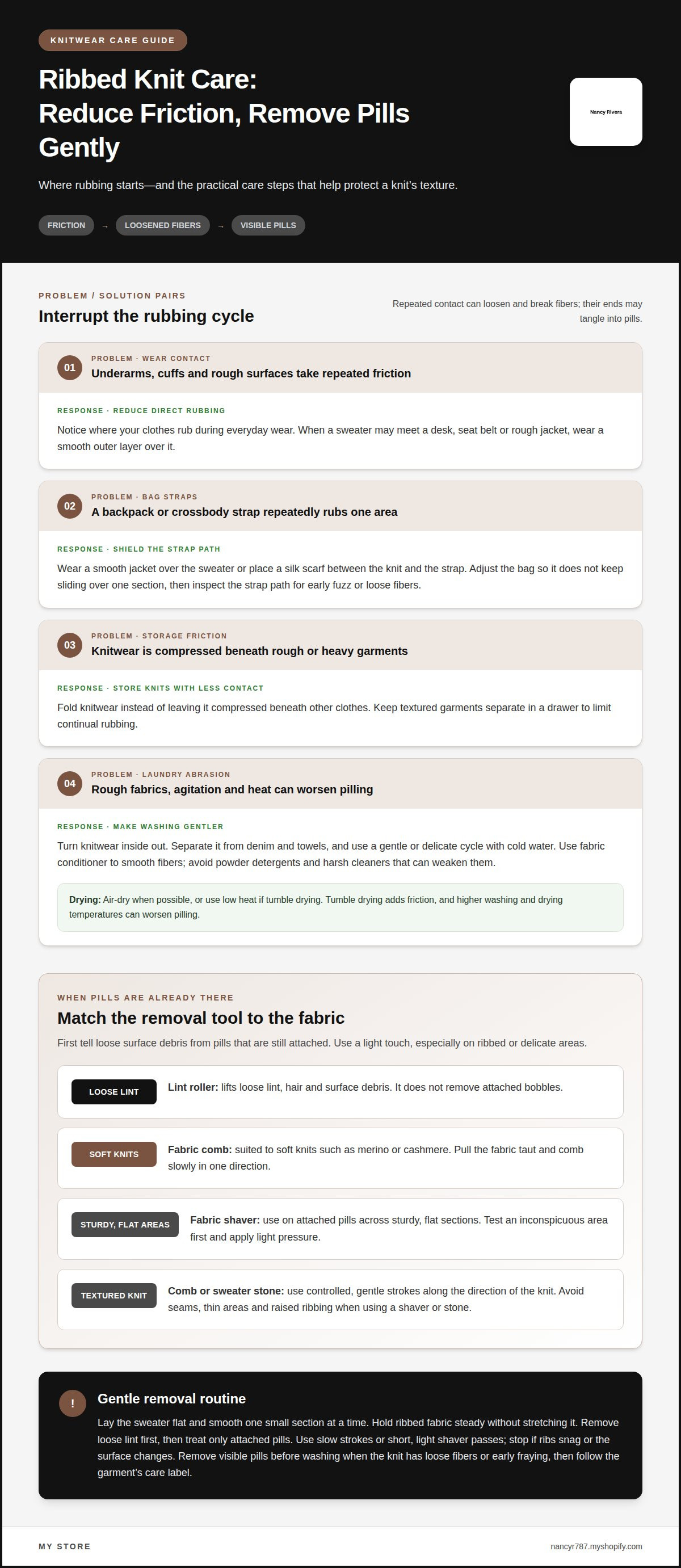
Check for loose debris and attached pills before choosing a tool. A lint roller lifts surface lint and loose fibers, but won’t remove attached bobbles. Use a fabric shaver on attached pills across sturdy, flat sections, testing an inconspicuous area first.
For soft knits such as merino or cashmere, choose a fabric comb. Pull the fabric taut and comb slowly in one direction. A sweater stone can also remove pills; move it gently along the direction of the knit without pressing hard.
-
Match Tools to Garments
Use a lint roller on sweaters, hoodies, and other garments to pick up loose lint, hair, or surface debris. It can also lift loose fibers from polyester, but won’t cut pills that remain attached to the fabric.
Choose a shaver for raised pills on smooth, sturdy areas, such as a hoodie’s front panel. For ribbed cuffs or textured knit sections, use a comb with controlled strokes. Keep shavers and stones away from seams and thin, delicate areas, where contact can catch or abrade yarns.
-
Remove Pills from Sweaters
Lay the sweater flat and smooth one small section at a time. Hold ribbed fabric steady without stretching it out of shape. Roll away loose lint first, then use a comb or shaver only on pills still attached to the knit.
Guide a comb slowly in one direction, or move a sweater stone gently along the knit. With a shaver, use light pressure and short passes; stop if the ribs snag or the surface changes. Remove pills before washing to help limit further fiber fraying, then follow the garment’s care label.
What makes a fabric truly anti-pilling?
Friction from wearing, washing, and drying can stretch and break fibers, creating pills on a garment’s surface. Effective anti-pilling fabric care for men's ribbed knitwear depends on reducing rubbing and following the care label.
-
Understand Friction and Pilling
Notice where clothes rub during everyday wear, such as underarms, cuffs, and areas beneath bag straps. Repeated contact loosens and breaks fibers, and their ends can tangle into visible pills. Cotton can pill too, especially where a garment meets a rough surface. Reduce rubbing at those contact points rather than relying on fabric labels alone.
-
Reduce Friction While Wearing and Storing
Wear a smooth outer layer over a sweater when it might rub against a desk, seat belt, or rough jacket. Fold knitwear before storing it instead of leaving it compressed beneath rough or heavy garments. Keep textured clothes separate in a drawer to limit continual rubbing. A sweater stone removes existing pills, but it won’t prevent friction during storage.
-
Shield Knitwear from Bag Friction
Wear a smooth jacket over a sweater or place a silk scarf between knitwear and a backpack or crossbody strap. This layer reduces direct rubbing where the strap crosses the shoulder or side. Adjust the bag so it doesn’t repeatedly slide over one section. After carrying it, inspect the strap path for early fuzz or loose fibers.
-
Limit Friction During Laundry
Turn knitwear inside out, separate it from denim and towels, and use a gentle or delicate cycle with cold water. Washing rough fabrics alongside a cotton sweater increases abrasion; agitation and existing lint balls can catch loose micro-threads. Use fabric conditioner to smooth fibers, and avoid powder detergents and harsh cleaners that can weaken them.
Air-dry the garment when possible, or use low heat if tumble drying. Higher washing and drying temperatures can worsen pilling, while tumble drying adds friction. Follow the care label and wash natural-fiber clothes only when needed. An anti-pilling fabric care routine for men's ribbed knitwear should account for each garment’s material and washing instructions.
Depilling wool, cashmere, and other knits
Choose a removal method based on the knit’s softness, texture, and the location of the pills. Pilling usually doesn’t affect how a garment functions, but on some fabrics, pills can contribute to fraying.
- Lay the garment flat and inspect the affected area before removing pills. Soft merino wool and cashmere suit a fabric comb, which can lift pills without a shaver’s broad contact. Pull the knit taut, then comb slowly in one direction. Avoid quick strokes that catch loose fibers or distort ribbed rows.
- Use a gentle touch with a sweater stone on wool, moving along the direction of the knit. Lambswool and angora have short, fuzzy fibers that tangle readily, so avoid pressing hard or repeatedly treating the same spot. Stop if the surface begins to look thin, stretched, or rougher than the surrounding knit.
- For sturdier, flatter knits, use a fabric shaver on attached pills, following its instructions and testing a hidden area first. Keep the surface smooth, guide the shaver lightly, and avoid seams or raised ribbing. Strong synthetic fibers, including polyester, can form persistent pills, so don’t pull them off by hand and risk drawing out more yarn.
- Remove visible pills before washing if the knit has loose fibers or early fraying. Machine agitation can rub fibers against one another, while drying adds more movement and abrasion. Turn fleece inside out before washing to reduce contact with its outer surface. Follow the care label, handle the garment gently, and avoid high heat that can worsen pilling.
Fiber types and pill resistance
Fiber choice affects how readily pills form and how long they remain. Follow the care label: cotton, wool, cashmere, and synthetic knits all need gentle handling, with washing and drying guided by the garment’s instructions.
-
Compare Fiber Pill Resistance
Check the fiber content before choosing a knit. Silk and linen resist pilling well because their long, smooth fibers resist breaking; Pima and Egyptian cotton also have a low likelihood of pilling. Ordinary cotton can still pill, especially in jersey or fleece with shorter fibers and repeated wear.
- Consider fiber strength as well as length. Cashmere has a medium likelihood of pilling because its fine, short fibers are delicate. Lambswool and angora pill readily as their short, fuzzy fibers tangle. Polyester and acrylic blends often pill readily, and their stronger synthetic fibers can leave pills that persist rather than break away.
-
Follow Care Instructions by Fiber
Read the care label first, then follow its washing and drying directions for cotton, wool, cashmere, or synthetic ribbed knits. For washable anti-pilling garments, turn them inside out and choose a gentle cycle with cold water. Separate soft knits from denim and towels to limit abrasion during machine washing.
- Wash natural-fiber garments only when needed to reduce repeated friction from laundry. Air-dry when possible, or use low heat if the label permits tumble drying. Handle cashmere or wool gently, and use a suitable comb on pills instead of pulling loose fibers by hand. Low-friction wear and storage also help protect ribbed knitwear.
For a ribbed short-sleeve option, view the men's waffle-knit V-neck shirt.
MY STORE: 2026 Men S Fashion Waffle Knit Ribbed Sleeve V Neck Short Sleeve T Shirt For Daily Commuting And Casual Wear
MY STORE offers the 2026 Men S Fashion Waffle Knit Ribbed Sleeve V Neck Short Sleeve T Shirt For Daily Commuting And Casual Wear as a ribbed-sleeve option for casual wardrobes. Consider it when choosing a men’s short-sleeve knit shirt; continue to use the garment’s care-label instructions and gentle washing practices to limit friction and reduce pilling.
The product name identifies its waffle-knit design, ribbed sleeves, V-neck, and casual-use category. It doesn’t specify fiber composition or a pill-resistance rating, so base care decisions on the garment’s label rather than assuming how a particular fiber behaves. Turn the shirt inside out before washing if the label permits, and separate it from rough laundry.
Contact MY STORE for information about this men’s waffle-knit shirt.
Make the Next Knitwear Choice a Practical One
When choosing your next garment, match its fabric and intended wear to a care routine you can maintain. Consider where you’ll wear the knit, how often it will be in rotation, and whether its care-label instructions fit your usual laundry habits. That makes upkeep part of wardrobe planning, rather than an afterthought once the surface shows wear.
A small wardrobe note can help: record each knit’s fiber content and care-label directions when you bring it home. Refer to it before washing, especially when garments have different requirements. Consistent anti-pilling fabric care for men's ribbed knitwear starts with choosing and maintaining garments to suit their actual use.
For a next step, contact MY STORE for knitwear care help. Keep the garment label as your reference, and make care decisions around the specific knit. A practical routine can help you get more considered use from the clothes already in your rotation.
Frequently Asked Questions
Is Pilling Permanent?
No. You can usually remove pills from the fabric surface, but removal doesn’t repair damaged or weakened yarn. After depilling, inspect the knit under good light. If the fabric shows thinning, pulled stitches, or holes, stop treating that area and avoid further rubbing. Pills may form again if the garment continues to experience abrasion during wear or care.
What Is Pilling on Clothes?
Pilling is the formation of small, tangled clusters of fibers on a garment’s surface. It differs from loose lint, which sits on top and can often be lifted with a roller. For example, a cuff may develop raised bobbles where its fibers repeatedly rub against a desk or jacket sleeve. Look closely before choosing a removal method, since loose lint and attached pills need different tools.
Does Pilling Mean a Garment Is Low Quality?
No. Pilling alone doesn’t prove that a garment is poorly made. Fiber type, yarn construction, knit structure, and repeated rubbing all influence the surface, and even cotton garments can develop pills. Treat pilling as one sign of wear, not a complete quality test. Also examine seams, holes, shape retention, and the garment’s overall condition to judge how well it has held up.
Does hot water cause pilling?
Hot water can worsen pilling, though temperature isn’t the only factor. Movement during washing creates friction, and heat during washing or drying may aggravate the effect. For a ribbed knit, follow the care label and choose a cooler, gentle wash when permitted. Don’t use heat to compensate for a crowded load; separating the knit from abrasive items reduces rubbing.
Is a Fabric Shaver or a Sweater Comb Better?
Choose a tool based on the knit’s texture and the location of the pills. A fabric shaver suits attached pills on a sturdy, flat area, while a sweater comb gives more control around ribbing and delicate sections. For example, a broad hoodie panel and a narrow sweater cuff need different handling. Test your chosen tool on a hidden area before treating visible parts.
Is a fabric shaver safe for delicate fabrics?
A fabric shaver can catch or abrade delicate fibers, so it isn’t the first choice for cashmere or fine wool. Use a fabric comb with slow, controlled strokes instead. If you use a shaver on another garment, test a hidden section, keep pressure light, and stop if the surface changes or yarns catch. Always follow the garment’s care label.