

Choosing a men's waffle knit V-neck shirt takes more than comparing product titles. Similar listings can differ in sleeve length, cut, neckline shape, and knit texture. If you want a short-sleeve option for everyday wear, compare those details directly instead of relying on the broad product label.
Use the same criteria for each shirt: how the neckline sits, where the sleeves end, what the fit description says, and how clearly the waffle texture is shown. Then check any available measurements and garment details. This guide explains how to assess those points and uses MY STORE’s short-sleeve waffle-knit ribbed-sleeve V-neck T-shirt, described for daily commuting and casual wear, as a practical example.
Key Takeaways
- Use product titles to identify the general style, not as complete garment specifications.
- Compare texture, neckline, sleeve length, and stated fit details consistently.
- Separate visible design features from fit or fabric claims that need product details.
- Assess potential warmth and bulk from the garment’s construction and specifications, not the waffle-knit label alone.
- Start with your routine, then prioritize the sleeve length, neckline, fit, and other details that matter to you.
What to Look for in a Men’s Waffle Knit V-Neck Shirt
Definition: A men’s waffle knit V-neck shirt has a textured knit surface, a neckline that forms a V at the front, and a particular sleeve construction. These terms describe different features: “waffle knit” refers to the surface texture, “V-neck” describes the opening, and “short sleeve” or “long sleeve” identifies sleeve length. A product title may name these features without specifying fit, fabric, or construction in full.
First decide what you need the shirt for, then evaluate the garment details. A listing that describes a shirt for casual wear or daily commuting gives you context about its intended use. It does not establish fabric weight, warmth, stretch, or fit. Look for those details in the product information rather than inferring them from terms such as “waffle knit” or “thermal.”
How the waffle-knit texture differs from a smooth T-shirt
Waffle knit has a visible grid-like surface, with raised areas and recessed spaces. That gives it a different appearance from the flatter surface of smooth jersey. Grid size and definition vary between garments. For background on the textile structure, see What is Waffle Fabric? Product photographs can help you compare the surface, while specifications provide garment details that images cannot show, such as fiber content or weight.
When available, compare both close-up and full-garment views. A close-up makes the grid easier to assess; a full view shows how prominent the texture looks across the shirt. Use photographs as visual evidence, not proof of thickness or performance.
What the V-neck and short sleeves contribute
The neckline and sleeve length are separate design choices. A V-neck creates an angled opening at the front, and its depth and width affect how open or covered it looks. Compare front-facing product images with your preference for neckline coverage and consider how the shape works with the layers you plan to wear. V-necks do not all have the same shape.
Short sleeves end above the elbow, while other sleeve constructions cover more of the arm. MY STORE’s listed short-sleeve waffle-knit ribbed-sleeve V-neck T-shirt is described for daily commuting and casual wear. It is an option to consider if you are looking for a short-sleeve style. The description identifies its design and intended use, not details such as fit or fabric weight.
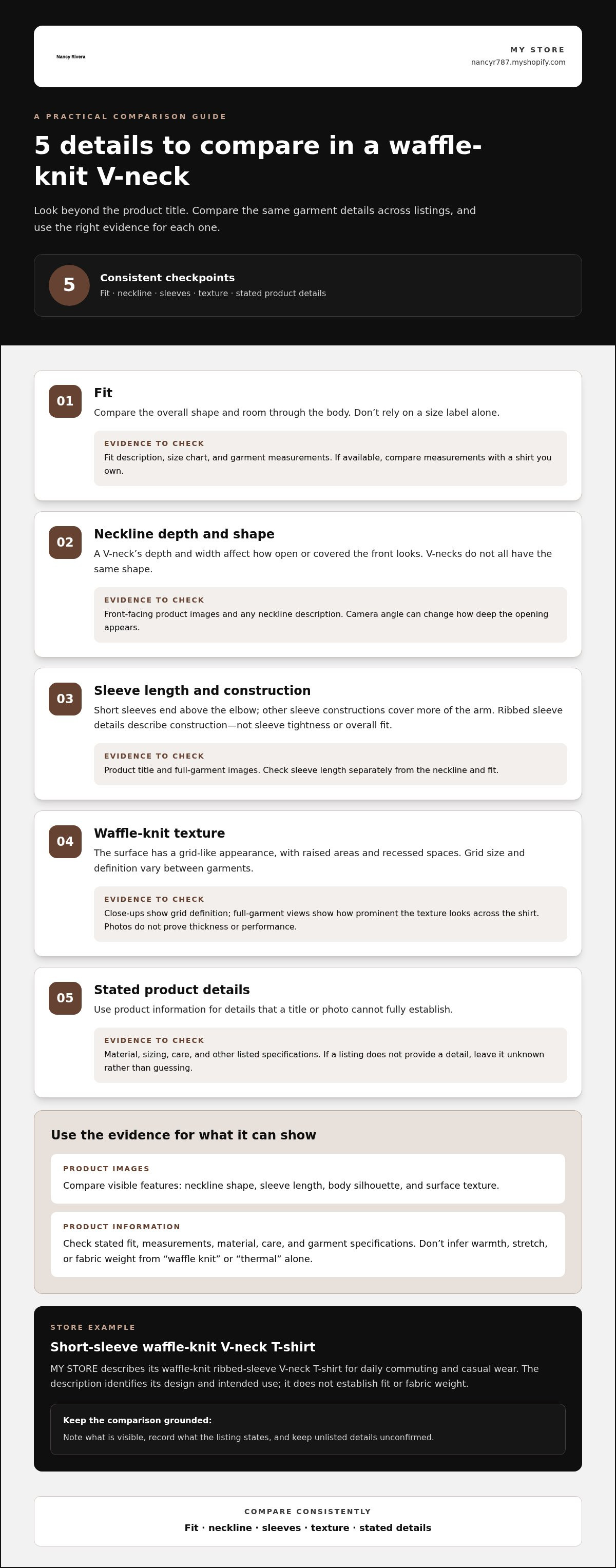
For each shirt, note the texture, neckline shape, sleeve length, stated fit, and intended use. Keep visible features separate from claims that depend on measurements or specifications. This makes it easier to compare similar titles without guessing how a shirt will feel or perform.
Compare Fit, Neckline, Sleeves, and Product Details
Product titles can make different garments sound alike, even when their construction and intended use vary. Compare each men's waffle knit V-neck shirt against the same checklist instead of relying on labels such as “thermal,” “classic,” or “relaxed” without supporting details. Use images for visible features and product information for stated fit, material, or measurements.
| Detail | What to compare | Evidence to use |
|---|---|---|
| Fit | Overall shape and room through the body | Fit description, size chart, and garment measurements |
| Neckline depth | How open or covered the V-shaped opening appears | Front-view product images and neckline description |
| Sleeve length | Short or long sleeves, plus visible sleeve construction | Product title and full-garment images |
| Texture | Grid visibility, scale, and surface definition | Close-up images and knit description |
| Stated details | Material, sizing, care, and other listed specifications | Product information, not assumptions based on the category |
Assessing fit from product information
Use the size chart and garment measurements when available. Compare them with a shirt you own, measuring it in the same way, rather than relying on the size label alone. A model photograph can give you a sense of the silhouette, but it cannot show how the shirt will fit you. Use terms such as regular, slim, or relaxed only when the product description supports them.
Checking neckline and sleeve preferences
Compare the V opening with your preferred level of coverage. The angle of a product photo can make a neckline look deeper or shallower, so use front-facing images where possible. Check sleeve length separately: short- and long-sleeve styles suit different preferences. Ribbed sleeve details describe construction, not sleeve tightness or overall fit.
For a fair visual comparison, look at similar views across listings. Use front views to compare the neckline and body shape, close-ups for texture, and full-garment images for sleeve length. Camera angle, pose, and styling can affect proportions. Treat images as visual evidence and rely on written specifications for details that photographs cannot establish.
Compare fit, neckline depth, sleeve length, texture, and stated product details before choosing. Record the information in a simple note or table. If a listing does not provide a detail, leave it blank rather than guessing. This keeps the comparison grounded in the information at hand.
Use the checklist with the store’s men’s short-sleeve waffle-knit V-neck T-shirt, described for daily commuting and casual wear, and weigh its stated design against your preferences.
Is a Waffle Knit V-Neck Too Warm or Bulky?
Not necessarily. Warmth and bulk depend on the individual garment’s construction and specifications, not its category name. Waffle knit describes a texture; it does not tell you the fabric weight, thickness, or how the shirt will feel in a particular temperature. One person may like the feel of a men's waffle knit V-neck shirt, while another may prefer a smoother or less textured surface.
Consider three separate questions: how warm the garment is intended to be, how it sits under another layer, and whether you like the surface texture. These factors can affect your choice, but they are not interchangeable. A pronounced grid does not establish the garment’s weight or warmth, and a “thermal” label is not a full description of its construction.
How to evaluate warmth without guessing
Read the product information for fabric composition, garment weight, and intended season. Each detail adds context, but none alone predicts personal comfort. Photographs can show the knit and visible construction, but they cannot prove insulation or how warm the shirt will feel. Do not apply another brand’s claims about waffle shirts to a different garment.
Start with written details, then inspect the images for visible construction and thickness cues. If the listing gives fabric weight, use it as one point of comparison, not a guarantee of how warm the shirt will feel. If weight or seasonal guidance is not provided, do not infer it from the word “waffle.”
Waffle knit alone cannot establish how warm a shirt will feel because warmth depends on the garment’s construction and stated specifications.
When texture or bulk may not suit a shopper
Texture is a matter of preference as well as design. If you prefer smooth jersey, the visible waffle grid may feel too prominent, even if the garment is not described as bulky. For layering, compare the stated cut and available measurements with the amount of room you want. Texture alone does not indicate whether the fit is close or roomy.
Seasonal suitability also depends on your planned use and comfort. A shirt described for casual wear or daily commuting has those intended settings, but that description does not establish a temperature range. MY STORE’s listed short-sleeve waffle-knit V-neck T-shirt is described for daily commuting and casual wear. Use that information to consider whether its stated uses fit your routine, and assess warmth separately.
Before choosing, review any listed fabric composition, weight, season, measurements, and fit description. Compare photographs for visible texture and construction, then decide whether the details match your layering preferences. Treat details not included in the product information as unknown rather than filling them in from a category label.
Choose a Shirt for Your Routine: A Practical Checklist
Start with when and where you expect to wear the shirt. A men's waffle knit V-neck shirt described for daily commuting may suit a different need from one chosen mainly for casual wear. Once you have a use in mind, compare the garment features and specifications that matter to your comfort and preferences.
Match sleeve length and neckline to daily use
Choose short or long sleeves according to your routine and comfort. Then compare the V-neck opening with the neckline coverage you prefer. Descriptions such as “commuting” and “casual wear” indicate intended use, not guaranteed warmth or fit. Consider each design choice on its own so one feature does not distract from another.
- Set the use. Decide whether you mainly want the shirt for daily commuting, casual wear, or both. Treat the listing’s stated use as context, not a performance promise.
- Choose sleeve length. Decide whether short or long sleeves suit your routine. Confirm the length in the product title and images, since listings can group different styles together.
- Compare the neckline. Look at the V opening and consider how much coverage you prefer. Front-facing images make comparisons easier because camera angle can change how deep a neckline appears.
- Assess the fit. Use the fit description, size chart, and garment measurements when available. Compare measurements with a shirt you own instead of guessing from a model photo or general size label.
- Review garment details. Check available fabric information, weight, care instructions, and photographs. Do not infer missing details from “waffle,” “thermal,” or another category term.
Use listing details to make the final comparison
Apply the same five steps to each option and record the evidence. This makes differences easier to spot when titles use similar terms for shirts with different sleeves or cuts. Photographs help you compare visible texture and construction; written specifications provide details images cannot reliably show. For fabric background, see a dedicated waffle-knit T-shirt explainer, but base garment-specific decisions on each listing.
For broader context, an everyday-wear guide can help you think about where a V-neck fits in a casual wardrobe, while a V-neck styling article can cover appearance and layering preferences. Keep the garment comparison focused on intended use, sleeve length, neckline, fit, and stated details.
Apply the checklist to the store’s men’s short-sleeve waffle-knit V-neck T-shirt, described for daily commuting and casual wear, and compare its listed details with your routine.
Explore the Men’s Waffle Knit V-Neck Shirt at MY STORE
MY STORE’s listed option is a men’s short-sleeve waffle-knit V-neck T-shirt with ribbed sleeves, described for daily commuting and casual wear. Use those details as a starting point, then assess each feature against your priorities. The description identifies the neckline, sleeve length, knit texture, sleeve detail, and intended use. It is not a complete account of fit or performance.
Review the listed shirt against your priorities
Start with the design. The V-neck and short sleeves are separate choices, so consider whether the neckline coverage and sleeve length suit you. Waffle knit and ribbed sleeves describe garment details, but do not establish fabric composition, warmth, fit, or sizing.
Next, compare the stated use with your routine. Daily commuting and casual wear are the listed settings. Decide whether they match when and where you expect to wear the shirt. Keep your own priorities in view, whether they are sleeve length, neckline, texture, or other garment details.
- Neckline: Does the V-neck shape suit your coverage preference?
- Sleeves: Does the short-sleeve construction match your intended use?
- Texture: Is the waffle-knit surface the look you want?
- Sleeve detail: Do the ribbed sleeves fit your design preference?
- Use: Do daily commuting and casual wear align with your routine?
Separate the shirt’s stated features from your expectations. The listing describes it as waffle knit, short sleeve, V-neck, and ribbed sleeve, with daily commuting and casual wear as intended uses. The knit label does not establish how warm the garment feels, and the sleeve detail does not specify how it fits.
Use the same priorities you applied to other options, but base your decision on this shirt’s description. If a feature is essential, compare the product information with your needs rather than relying on general assumptions about waffle-knit V-necks.
Continue to the product listing
Review the listed design and intended use against your preferences for neckline, sleeve length, texture, and everyday wear. View the men's waffle-knit V-neck shirt and decide whether this short-sleeve option suits your routine.
Make Your Next Shirt Choice With Clear Priorities
Use your comfort and routine as the final reference point. Decide which details are essential, then separate them from preferences that can vary, such as how prominent the knit texture is or how open the neckline looks. A men's waffle knit V-neck shirt is easier to assess when you know what matters before browsing.
MY STORE’s listing describes a short-sleeve waffle-knit V-neck shirt with ribbed sleeves for daily commuting and casual wear. Use those details as a starting point and compare the listing with your priorities. Keep product descriptions separate from assumptions, and base your decision on the information provided.
Ready to compare the design with your preferences? View the men's waffle-knit V-neck shirt and decide whether its listed features and intended use fit your routine.
Frequently Asked Questions
Can a waffle-knit V-neck shirt be machine washed?
Machine washing is appropriate only if the garment’s care label allows it. Check the label and follow its stated water temperature and cycle. Sort the shirt as directed, including separating it from items that may transfer color or need different treatment. Care can depend on fiber content and construction, so do not assume that instructions for one waffle-knit shirt apply to another.
Will a waffle-knit shirt shrink after washing?
A waffle-knit shirt may change size after washing. The amount depends on its fiber content, construction, and care conditions, not the waffle texture alone. Check the garment label and follow its care guidance. Avoid assuming a shirt will keep its shape, since results depend on the individual garment and how it is cared for.
How should I store a waffle-knit shirt to help it keep its shape?
Choose a storage method that suits the shirt’s weight and construction, and follow any care guidance supplied with the garment. Avoid leaving clothing crowded or under prolonged pressure, which may distort it. Folding or hanging may each be appropriate depending on the shirt and your storage space. Consider how the particular garment holds its shape rather than assuming every waffle-knit shirt needs the same treatment.
Can I wear a waffle-knit V-neck shirt under a jacket?
Yes, if the shirt and jacket fit comfortably together. Layering depends on the shirt’s cut and texture, the jacket’s shape, and your comfort while moving. Try them together where possible and check for pulling, bunching, or unwanted bulk around the shoulders and sleeves. A waffle-knit V-neck is not automatically lightweight or designed for layering, so assess the individual garment.
Does waffle knit mean a shirt is thermal?
No. Waffle knit describes a textured fabric construction, while “thermal” generally refers to a garment’s intended insulating use. Listings may use both terms, but one does not prove the other. Read the product description and material details to understand how the shirt is categorized. Do not treat texture alone as evidence of how warm a particular garment will feel.
How can I compare waffle-knit shirts when product photos look similar?
Compare each listing’s neckline, sleeve length, measurements, material information, and care instructions, then inspect close-up images for texture. Similar titles can describe different cuts or constructions, so consider written details alongside photographs. Images show appearance but may not establish fit or fabric composition. Note any details the listings do not provide, then judge the options against your size, comfort, and intended use.