

Men’s accessories include jewelry, bags, wallets, belts, hats, and caps. The right choices depend on what you carry, what you wear, and how much detail you want to add. Practical accessories can also bring texture or color to an outfit without changing its main pieces.
Storage and style often come down to the same decision: choose an accessory that fits its daily use as well as your preferred look. This guide covers the main types of men’s accessories, including how jewelry, bags, wallets, clothing accessories, hats, and caps can serve different needs.
Consider each item’s role in your wardrobe, then focus on materials and styles that suit your routine. The overview also covers men’s jewelry, everyday caps, and clothing options available from MY STORE.
Key Takeaways
- Match jewelry to the occasion and the level of detail in your outfit, from simple everyday pieces to formal accessories.
- Choose bags, wallets, and belts around what you carry and how you dress; shape, material, and texture affect their everyday use.
- Use hat and cap styles as practical wardrobe additions, with fabric and design helping determine where each option fits.
- Coordinate accessory colors and sizes with clothing proportions to create a more consistent overall look.
Men’s jewelry and accessories
When choosing men’s accessories, start with the occasion, then select jewelry that suits the outfit’s formality. A simple chain works with an open collar, while a tie bar adds a subtle detail to a dress shirt. Cufflinks tie a suit together without introducing another color. Matte-finish tie bars suit modern suits, while mother-of-pearl cufflinks complement traditional formalwear.
Material affects an accessory’s appearance, weight, and care. Stainless-steel wheat chains are described as durable and low-maintenance for daily wear. Titanium bands are lightweight and durable, while tungsten rings suit those who prefer a substantial feel. Minimalist earrings may be made from silver, gold, or platinum. For a coordinated look, choose a finish that echoes your watch or belt.
Choose one focal piece when your clothing already has bold patterns. A beaded bracelet layers well with a plain sleeve, while a metal bracelet adds an industrial accent. A black crystal necklace contrasts with a light shirt; a silver chain sits neatly beneath a collar. For a coordinated dinner outfit, pair jewelry with other accessories in similar metal tones. Keep the chain length and pendant size in proportion to the neckline.
The U.S. Bureau of Labor Statistics survey includes suits and tuxedos purchased for men aged 16 or older, including two-piece-or-more suits and formal suits. Cufflinks and tie bars suit formal occasions. Hats belong to headwear, so consider them separately from jewelry when assembling an outfit.
Before buying, decide whether the piece is for everyday wear, formal dress, or visual contrast. Compare its metal color with your belt hardware, watch case, and shirt buttons, then repeat one finish for coordination. Limit statement pieces when lapels, prints, or a patterned collar already draw attention. Choose the occasion, material, and finish, then assess the accessory’s scale against your clothing. This keeps the selection focused without making every item identical.
Carbon-fiber cufflinks suit contemporary style, while men’s sunglasses are available with high-protection UV lenses. Customizable watch straps can adapt a watch to different clothes and occasions.
Bags, wallets, and clothing accessories
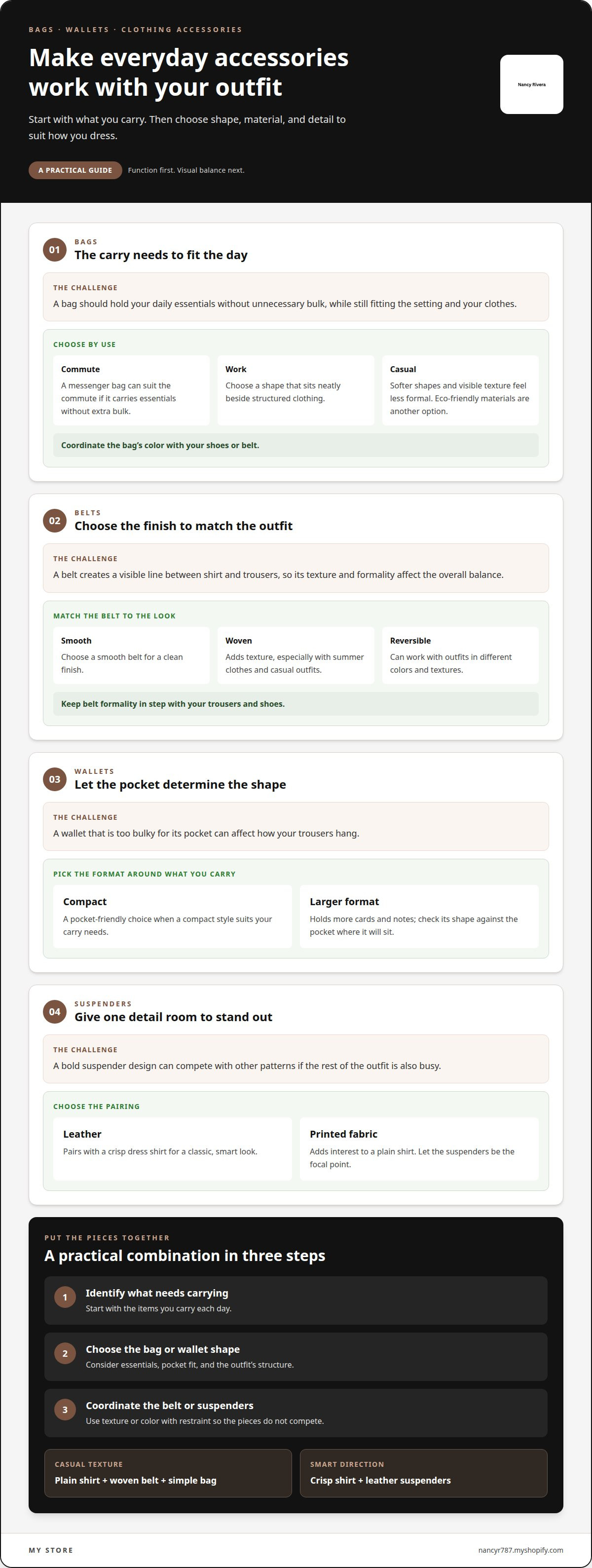
Choose a bag based on what you carry each day. A messenger bag can suit a commute if it holds your essentials without unnecessary bulk. Bags made with eco-friendly materials offer another way to combine everyday practicality with a sustainability commitment. For work, choose a shape that sits neatly beside structured clothing; for casual outfits, softer shapes and visible texture feel less formal. Coordinate the bag’s color with your shoes or belt.
Belts serve a practical purpose and create a visible line between a shirt and trousers. A reversible belt can work with outfits in different colors and textures, so you need not match one belt to every combination. Woven belts add texture, especially with summer clothes and casual outfits. Choose a smooth belt for a clean finish, or a woven design when the rest of the outfit is simple. Match the belt’s formality to your trousers and shoes.
Choose a wallet that suits how you carry it. A compact style fits a pocket, while a larger format holds more cards and notes. Check its shape against the pocket where it will sit, since excess bulk can affect how trousers hang. Leather suspenders pair with a crisp dress shirt for a classic, smart look; printed fabric suspenders add interest to a plain shirt. Let suspenders be the focal point rather than combining a bold design with competing patterns.
Build a practical combination in three steps: identify what needs carrying, choose the bag or wallet shape, then coordinate the belt or suspenders with the outfit. For example, a plain shirt, woven belt, and simple bag create texture without relying on a print. A crisp shirt and leather suspenders create a more formal direction. For another reference point, browse everyday clothing options when coordinating accessories with an outfit.
The Office of Price Administration stated: Certain apparel accessories were among the commodities covered by the regulation.
When comparing accessories, consider both function and visual balance. Let a bag or wallet serve its carrying purpose, then use a belt or suspenders to reinforce the outfit’s formality. A restrained choice allows texture or color to stand out without making several elements compete.
Men’s hats and caps
Choose a hat or cap to suit the setting, clothing, and weather. A baseball cap gives casual outfits a defined, sporty finish. A bucket hat has a brim around the crown and pairs well with relaxed clothing. For a coordinated look, choose a hat color close to a shade in your shirt, trousers, or shoes. A contrasting color creates a more noticeable accent.
Fabric affects comfort and practical use. Technical-fabric bucket hats may offer breathability and water resistance for changing outdoor conditions, while some high-performance caps include UV protection. These features depend on the specific design, so consider them separately from appearance when choosing a hat. For daily wear, weigh the material against the setting and time spent outdoors.
A cap’s print also affects how it works with an outfit. A solid-color cap can balance a printed shirt, while a patterned cap adds detail to plain clothing. Keep the rest of the outfit simple when the hat has a prominent print. For example, wear a patterned cap with a solid shirt and neutral trousers. A plain cap can complement a graphic T-shirt without competing for attention.
- Casual outfit: Pair a baseball cap with a T-shirt and jeans.
- Relaxed outdoor look: Consider a bucket hat with simple, lightweight clothing.
- Changing weather: Look at technical fabric and its stated features.
- Strong print: Balance a patterned hat with solid-color clothing.
Choose a hat by identifying the setting, selecting a shape, and then coordinating color and print. A cap for commuting may call for a different look from a hat worn with relaxed weekend clothes. If UV protection or water resistance matters, look for a design that specifically includes that feature. Make the hat part of the outfit by keeping its style consistent with the rest of your clothes.
Accessory colors and sizes
Coordinate accessories with the outfit’s main colors, using contrast selectively. A navy tie works with a light-blue shirt, while a dark belt can anchor neutral trousers. Repeating a color, such as black in your belt and shoes, creates a connected look. For a bolder accent, choose one contrasting item and keep the other accessories simple. This works for both casual and formal outfits.
Scale matters as much as color. A narrow tie creates a different proportion from a wider one, so compare its width with the shirt collar and jacket lapels. One listed basic light-blue tie measures 6 cm wide. Use that measurement as a specific example, not a universal fit rule. A small accessory can look understated on a broad outfit, while a large pattern can dominate a plain shirt.
- Repeat a color: Pair a brown belt with brown shoes and neutral trousers.
- Add contrast: Use a light tie against a darker shirt or jacket.
- Balance patterns: Combine a printed tie with a solid shirt.
- Check proportions: Compare tie width with the collar and lapels.
For bags and wallets, compare dimensions with your storage needs and clothing. A compact wallet suits a pocket when you carry fewer items; a larger format takes up more space. Choose a bag size based on what it must hold, then consider how its shape sits with your outfit. Avoid pairing a bulky bag with clothing that already has prominent patterns or oversized details.
Use a simple sequence: identify the outfit’s dominant color, select one coordinating or contrasting shade, then compare accessory scale with clothing proportions. For example, a solid shirt can balance a patterned tie, while a simple belt can keep patterned clothing from competing. Browse clothing options for outfit coordination to apply these color and proportion choices.
MY STORE
MY STORE offers men’s clothing and caps for everyday outfits. Its catalog includes ARTIE Men’s Wear, a waffle-knit V-neck short-sleeve T-shirt for commuting and casual wear, and baseball caps for men and women. These pieces can complete a casual look and coordinate with other accessories.
Use the selection guide to decide what your outfit needs first, such as a cap for casual wear or a suitable men’s clothing piece. Then consider color, shape, and the setting when putting the pieces together. For readers looking for a coordinated outfit base rather than bags or wallets, MY STORE’s men’s wear and caps offer relevant categories to browse.
Contact MY STORE with questions about its clothing and cap offerings.
Choose the Next Piece for Your Wardrobe
Base your next choice on one clear need: a more defined outfit, a useful everyday item, or a detail for a specific occasion. Setting a priority helps keep men’s accessories coordinated with clothes you already wear, rather than adding items without a clear purpose. Decide whether the next addition should be practical, decorative, or both, then choose a color and shape that work with your regular outfits.
For a jewelry option, MY STORE offers an AAA jewelry chain set for bridal banquets and dinners. The catalog also includes versatile off-shoulder knitwear for women. Each suits a different wardrobe need, so choose according to the occasion and style you have in mind.
Use that priority to guide your next selection, whether you’re choosing jewelry or coordinating clothing. Contact MY STORE about its offerings to take the next step. Choose the piece that fits your wardrobe, and build from there.
Frequently Asked Questions
What accessories are essential for men?
Essential accessories for men depend on daily routines and clothing needs. A wallet and belt cover practical basics, while a watch, simple jewelry, or cap can add function or visual interest. For a workday, choose items that fit comfortably with your clothes and suit the dress code. For travel, prioritize pieces that carry essentials without unnecessary bulk.
What men's accessories make good gifts?
A simple chain, titanium band, or wallet suited to how the recipient carries it can make a practical gift. Choose an item that fits their style and whether they need an everyday or formal accessory.