

The most practical V-neck isn’t necessarily the deepest or most fitted. When comparing men's V-neck shirts for everyday wear, focus on the neckline, the fabric and construction details stated in the listing, and how you plan to wear the shirt. Those details matter when one shirt needs to work for commuting and casual settings.
A crew neck has a familiar, higher opening, while a V-neck creates a more open neckline. Neither is automatically more comfortable or versatile. The right option depends on your coverage preference and the layers you wear. Fabric descriptions also need a closer look: a knit name can describe texture without specifying fiber content, fit, or care.
This guide explains what to compare, how to choose between V-neck and crew-neck styles, and what product descriptions can tell you. As a practical example, MY STORE’s men’s short-sleeve waffle-knit V-neck T-shirt is listed with ribbed sleeves and for daily commuting and casual wear. Use those stated features to assess whether the shirt suits your preferences and wardrobe.
Key Takeaways
- Match the neckline and construction details to where you plan to wear the shirt and how you prefer it to feel.
- Compare stated product details separately from impressions you form from photos.
- Choose between men's V-neck shirts for everyday wear and crew-neck options based on neckline coverage and how you layer.
- Use a short checklist to compare options, then refer to the product’s size and care information when provided.
- MY STORE’s listed men’s shirt is short-sleeved and waffle-knit, with ribbed sleeves and stated use for commuting and casual wear.
What Makes a Men's V-Neck Shirt Practical for Everyday Wear?
An everyday V-neck is one that suits the settings where you’ll wear it regularly, not just a single outfit or occasion. Consider how the neckline feels, whether the shirt works with clothes you already own, and whether its care instructions fit your usual laundry routine. A product title can help you identify a style, but it can’t establish how the shirt will feel or fit you.
A V-neck slopes down from the shoulders to form a “V”; a crew neck has a rounder opening that sits higher around the base of the neck. Both are common T-shirt styles. For an overview of the garment’s development and variations, see T-shirt history and types.
Assess the main considerations separately. Comfort is personal, so look for stated fabric and fit details rather than relying on a style name. For the neckline, decide how much of your upper chest you want covered. For pairing, think about the trousers, overshirts, or jackets already in your rotation. For care, use the garment’s instructions instead of assuming all T-shirts need the same treatment.
- Comfort: Compare stated fabric and fit details with your own preferences.
- Neckline: Decide how open or covered you want the front to feel.
- Pairing: Consider the clothes you already wear regularly.
- Care: Follow the garment’s instructions rather than assuming a standard method.
Product titles and images are useful, but they show different kinds of information. A photo can help you compare the visible neckline and sleeve shape; the title may identify a knit or construction detail. Neither necessarily provides exact measurements, feel, or fit. When comparing men's V-neck shirts for everyday wear, separate stated product information from what you can only infer visually.
Which everyday settings should the shirt suit?
Think about commuting, casual plans, and relaxed home use as distinct situations. A shirt worn beneath a jacket needs to feel comfortable under that layer; worn on its own, its neckline and visible construction become more prominent. Identify where you’ll wear it most, then decide whether it needs to work in more than one setting. This makes it easier to compare listings against a real use case rather than a general label such as “everyday.”
What makes a V-neck feel wearable rather than overly formal?
Use product images to compare the visible depth and shape of the neckline, then consider whether that look suits your routine. Some people prefer a shallower opening for a more covered feel; others are comfortable with a deeper V. There is no universal depth that works for everyone. Choose based on the amount of coverage you like and the settings where you plan to wear the shirt, not on broad claims about which cuts look current.
As a final check, picture the shirt in your two most common situations: worn alone and, if relevant, beneath a layer. Consider whether the neckline looks and feels appropriate in each. Then factor in any supplied fit and care details. This gives you a practical basis for deciding whether the shirt is likely to suit repeat wear.
How to Compare Men's V-Neck Shirts for Comfort and Construction
A useful comparison starts with details you can check, not assumptions based on a product name or photograph. Review neckline, sleeves, fabric description, and garment length as separate features. Then compare them with your routine and preferences. No single fabric or construction suits every wearer, so focus on what the listing states and what matters for the way you’ll use the shirt.
Core comparison criteria: neckline shape, sleeve construction, stated fabric composition, garment length, fit information, and care instructions.
- Neckline: Compare the V shape and apparent depth in the product images.
- Sleeves: Note the stated sleeve length and any details such as ribbed construction.
- Fabric: Read the stated fiber composition and any named knit or fabric type.
- Length and fit: Use listed measurements or fit descriptions instead of guessing from a model photo.
- Care: Follow the garment’s own care information rather than general expectations.
How should shoppers assess neckline, sleeves, and length?
Look at the V from the collar to its point and note its shape and apparent depth. Images help with visual comparison, but camera angle and styling can change how a neckline appears. Check the listing for sleeve wording and garment length. Terms such as “casual” and “everyday” describe intended use, not a particular fit, sleeve length, or hem position.
Keep stated details distinct from visual impressions. A sleeve may look fitted in a photograph, for example, but the image alone doesn’t establish its construction or feel. A model’s proportions also don’t predict how the garment will fall on another wearer. For a clear comparison, record the details each listing actually gives and avoid treating a visual impression as a specification.
What can a fabric description tell you?
If a listing provides fiber composition, use the stated fibers and proportions as product information. Don’t infer softness, stretch, breathability, or season from a fabric name alone. Care requirements depend on the garment’s instructions, not just its fiber or knit description. Comparing listings on those terms helps you see what is specified and whether the supplied care information suits your routine.
Construction terms describe different features. “Waffle-knit” identifies a knit texture, while “ribbed sleeves” describes a sleeve detail. Neither term by itself establishes fiber content, fit, or care requirements. MY STORE’s listing describes a men’s short-sleeve waffle-knit V-neck T-shirt and identifies ribbed sleeves. These are concrete features to compare without assuming other fabric properties.
Apply the same approach across men's V-neck shirts for everyday wear: compare documented features first, then decide whether they match your priorities. Use the listed details to assess the men's waffle-knit V-neck shirt against your preferences for neckline, sleeve construction, and fabric description.
V-Neck or Crew Neck: Which Shirt Fits Your Daily Routine?
Compare necklines by coverage, personal preference, and how you normally wear a shirt. A V-neck opens below the collar, while a crew neck has a rounder, higher neckline. These are design differences, not guarantees about comfort or fit. For everyday use, the practical question is whether the neckline feels right in your usual settings and under the layers you wear.
| Consideration | V-neck | Crew neck |
|---|---|---|
| Neckline coverage | More open at the front; depth varies by garment. | Higher, rounded opening; coverage varies by garment. |
| Visual preference | Creates a visible V shape at the neckline. | Creates a rounded outline near the base of the neck. |
| Layering considerations | Consider whether the opening works with the layer worn over it. | Consider whether the higher neckline sits comfortably under your usual layers. |
Use the comparison as a routine-based filter, not a ranking. If you wear a shirt alone during a commute, you’ll notice the neckline more than when it sits beneath a jacket. If you change layers during the day, consider whether the collar stays comfortable and looks the way you prefer in both situations. Neither shape is automatically better for everyday wear.
When might a V-neck be the more comfortable choice?
Some wearers prefer a more open neckline because it leaves more of the upper chest uncovered. Compare the visible depth in product images with your coverage preference and intended use. For instance, someone who likes an open neckline when wearing a shirt alone may favor a V-neck. That is a personal preference, not a promise about proportions or a fit for every body type.
When might a crew neck be the better alternative?
A crew neck may suit someone who prefers a higher, round neckline or more coverage at the collar. A wearer who finds an open neckline distracting on a commute, for example, might prefer a crew neck for that routine. There’s no need to base the choice on trend judgments. Focus on what feels comfortable and appropriate in the settings where you’ll wear the shirt.
Keep neckline choice separate from other product features. MY STORE’s listed shirt is described as a short-sleeve waffle-knit V-neck with ribbed sleeves, and its title identifies daily commuting and casual wear. Those details establish the listed neckline and construction descriptors, but not how deep the V appears on every wearer or how it feels beneath a particular layer.
Before choosing, picture a typical day and decide whether you prefer a neckline for wearing the shirt alone, beneath another layer, or both. Then compare the listing’s visible neckline and stated details with that preference. This keeps the decision grounded in your routine rather than treating either style as the universal choice.
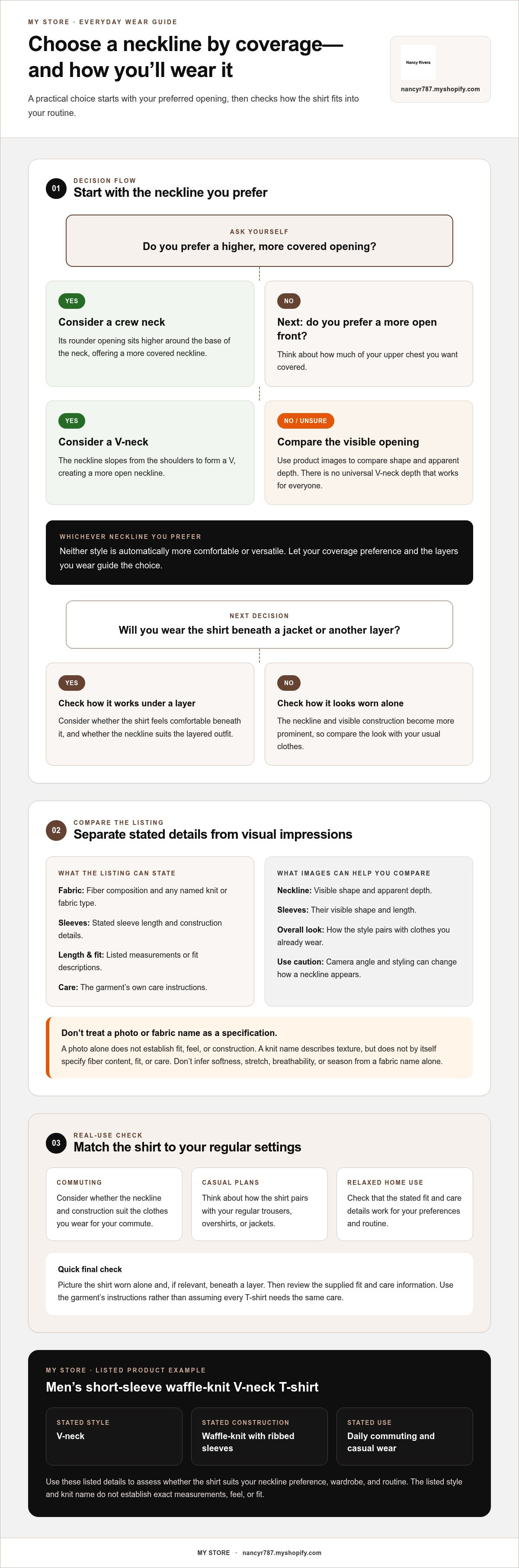
A Simple Checklist for Choosing an Everyday Men's V-Neck
A short process makes product comparisons easier to manage. Start with how and where you expect to wear the shirt, then use your neckline preference and the listing’s stated details to narrow the options. Separate must-haves from nice-to-haves: a comfortable neckline or care instructions that fit your routine may be essential, while a particular sleeve detail may simply be a preference. Use specifications to make the decision; don’t expect photographs or broad labels to replace them.
- Define the use. Identify your main setting, such as commuting, casual plans, or relaxed home use. Decide whether you’ll wear the shirt alone, under a layer, or both ways. This gives you a practical standard for comparing listings.
- Choose your neckline preference. Decide how open you want the front to feel and look. Use the visible depth of the V as a guide, while allowing for differences in camera angle and product presentation.
- Review the listing details. Read the product title, examine the images, and check the written construction details and supplied specifications. Use the product’s size and care information when provided. Don’t infer missing fiber, measurement, or care details from general assumptions.
- Compare against your priorities. First check which options meet your must-haves. Then weigh optional details, such as sleeve construction, without letting them distract from the use, neckline, or product information that matters most to you.
Which details should you check before adding a shirt to your cart?
Start with the title and images, then look for written details about neckline, sleeves, fabric, length, fit, and care. Compare the information supplied for each item with the settings and layering needs you identified. A short note of which must-haves each listing meets can make the choice clearer. If a detail isn’t stated, treat it as unknown rather than assuming a standard specification.
How can you avoid choosing based on a product photo alone?
Photographs can help you assess visible design, including neckline shape and sleeve appearance. They don’t establish fiber composition, garment measurements, or how a particular fit will feel. Use written product information for those specifics when supplied. If a personal preference depends on a detail that isn’t shown or stated, don’t turn a visual impression into a product fact.
Keep the final comparison focused. If a title specifies a V-neck and short sleeves, those are listed attributes; they don’t establish the garment’s exact length or fiber content. This distinction helps you compare men's V-neck shirts for everyday wear using stated details rather than letting optional features or polished photography make the decision for you.
Use the checklist to assess the listed men’s waffle-knit V-neck shirt against your routine and priorities.
MY STORE's Men's Waffle-Knit V-Neck Shirt for Daily Wear
Apply the selection criteria to the details listed for MY STORE’s men’s shirt. The product is described as a short-sleeve V-neck T-shirt, with a waffle-knit design and ribbed sleeves. Its title also names daily commuting and casual wear as intended contexts. Compare those stated features with your own preferences rather than assuming how the shirt will feel or fit.
Which confirmed details describe the listed shirt?
The listing describes short sleeves, a V-neck, waffle-knit, and ribbed sleeves. “Waffle-knit” and “ribbed sleeves” refer to separate construction details. The stated use contexts are daily commuting and casual wear. Together, these details identify the shirt’s listed style and intended use; they don’t define fiber composition, measurements, fit, care requirements, or performance.
- Shirt type: Men’s short-sleeve T-shirt.
- Neckline: V-neck.
- Listed construction descriptors: Waffle-knit with ribbed sleeves.
- Stated use contexts: Daily commuting and casual wear.
Use these descriptors as a factual snapshot, not a substitute for your own comfort preferences. The V-neck label identifies the neckline type but doesn’t specify how deep it appears. Waffle-knit names the listed knit style but doesn’t establish the fibers used or how the fabric feels. Ribbed sleeves describe a sleeve detail, not the overall fit of the shirt.
How to decide whether this listing matches your preferences
Start with the neckline. Compare the V-neck description and product-page information with your preferred level of coverage. Then consider whether short sleeves and the stated commuting and casual contexts align with when you plan to wear the shirt. Treat these as separate decisions: a match on intended use doesn’t answer questions about fit, care, or fabric composition.
Use the product page’s size information to guide your size decision, and follow the garment’s care instructions. Read written specifications rather than trying to infer them from the title or photographs. This keeps your assessment grounded in the listed details and distinguishes the shirt’s described features from your expectations.
For shoppers comparing men's V-neck shirts for everyday wear, this listing offers clear starting points: short sleeves, a V-neck, waffle-knit, ribbed sleeves, and stated commuting and casual contexts. Compare those facts with your priorities. If they suit your needs, browse the men's V-neck shirt and review the product details.
Choose the Next Shirt for Your Wardrobe
Give the decision a practical endpoint by identifying the role you want the shirt to fill. It might replace a frequently worn basic, add a different neckline to your regular rotation, or give you another option for commuting and casual plans. Knowing that purpose makes it easier to judge whether a new shirt adds useful variety or duplicates what you already wear.
For men's V-neck shirts for everyday wear, use your own routine and preferences as the final standard. Product descriptions help you compare stated features, but you decide which of those features matter most. Before choosing, consider whether the listing’s details fit the role you have in mind.
Ready to choose an option for your wardrobe? Browse the men's V-neck shirt and review its product information.
Frequently Asked Questions
Is a men's V-neck shirt suitable for everyday wear?
Yes. A V-neck can suit everyday wear when its neckline and construction fit your comfort preferences and routine. Consider a real use case, such as commuting and then meeting friends casually. MY STORE’s listed short-sleeve waffle-knit V-neck is described for commuting and casual wear. Compare its stated product details with the way you plan to wear it.
Can you wear a V-neck shirt on its own?
Yes, if you’re comfortable with the neckline and visible design. Look at the product images and consider whether you’d feel at ease wearing that style in your usual settings. MY STORE’s listing describes a short-sleeve V-neck for commuting and casual wear; your preference about wearing it on its own is personal.
How do you choose the right V-neck depth?
Choose a depth that gives you the coverage you prefer. Compare product images with shirts you already feel comfortable wearing, and consider whether you’ll wear the shirt alone or beneath another layer. Images can help you compare visible designs but may not show an exact measurement. Don’t assume a precise depth unless the product information states one; there’s no single measurement that works for everyone.
What should you check when buying a men's V-neck shirt online?
Review the product title and images, then check the neckline and sleeve descriptions and any supplied size, material, and care information. Compare those details with how you plan to wear the shirt, such as beneath a layer during a commute or on its own for casual plans. Photos show visible design, but they don’t establish fabric performance or fit. Use written product information for specifics.
Is a waffle-knit V-neck different from a regular T-shirt?
Waffle-knit and V-neck describe different features: one refers to knit texture, the other to neckline shape. A shirt can have both, as in MY STORE’s listed waffle-knit V-neck. The terms alone don’t establish fiber composition, warmth, stretch, or care requirements. Compare the texture and neckline separately, then use the product’s specifications for any additional details.
Can a men's V-neck shirt work for commuting and casual wear?
It can, if the design suits your preferences in both settings. Consider whether you’ll wear it alone for casual plans or under another layer during a commute. MY STORE’s listing describes its short-sleeve waffle-knit V-neck for daily commuting and casual wear. Compare those stated contexts and features with your routine and comfort priorities.
How should you care for a V-neck shirt?
Follow the care instructions for the specific garment. Check the product page and, once you have the shirt, its garment label for washing and drying guidance. Don’t assume that a V-neck or waffle-knit description determines the correct care method; instructions can depend on the garment’s materials and construction. Guidance for another shirt may not apply, even if the neckline or texture looks similar.