

A jewelry set for formal wear works best when its scale and shape complement the outfit instead of competing with it. For a V-neck, a pendant or Y-shaped necklace can follow the neckline. With sequins, beads, or metallic thread, simpler earrings or a fine chain keep the clothing details in focus.
Coordinated pieces can make an occasion outfit feel complete, but every item does not need to match. Necklace length, earring weight, bracelet movement, and ring fit all affect comfort throughout an event. Materials and finishes also shape the look, from sparkle and pearls to colored stones and gold- or silver-tone surfaces.
This guide covers practical ways to coordinate jewelry with formal outfits, compare common materials and finishes, and select bridal styles that complement a dress without overpowering it. Use the neckline, outfit detail, event setting, and preferred metal tone as starting points, then compare set pieces for fit and visual balance.
Key Takeaways
- Compare necklace length, bracelet movement, ring fit, and earring weight to choose coordinated pieces that remain comfortable throughout an event.
- Match the jewelry’s scale to the occasion and outfit details; ornate fabric often pairs better with understated accessories.
- Distinguish gold-tone or silver-tone color from gold-plated or silver-plated construction when comparing materials and finishes.
- For bridal looks, use the dress neckline, wedding colors, and overall theme to guide the choice of necklace shape and metal tone.
- When gifting a set, consider the recipient’s usual jewelry style and the occasions where the pieces could be worn together or separately.
Necklace, bracelet, ring, and earring fit
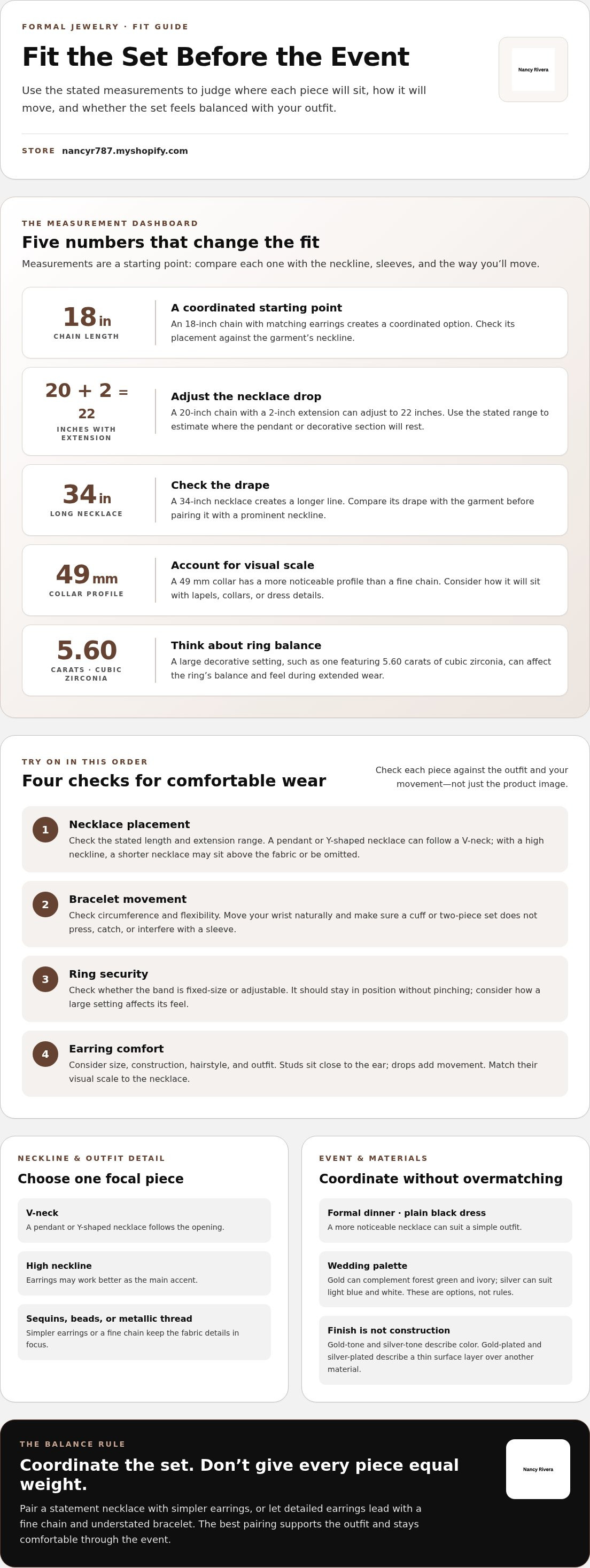
Check each piece against the outfit and the wearer’s movement before choosing a coordinated set. A necklace should rest at a position that suits the neckline, while earrings should feel manageable throughout the event. For example, an 18-inch chain with matching earrings creates a coordinated option, but its placement may differ across necklines and garments.
Use the necklace’s stated length and extension range to judge where its pendant or decorative section will sit. A 20-inch chain with a 2-inch extension can adjust to 22 inches. A 34-inch necklace creates a longer line, so compare its drape with the garment before pairing it with a prominent neckline. These measurements help assess fit rather than relying on product images alone.
Consider the pendant or collar’s dimensions as well as chain length. A 49 mm collar has a more noticeable profile than a fine chain, which can affect how it sits with lapels, collars, or dress details. For a V-neck, choose a pendant or Y-shaped necklace that follows the opening. For a high neckline, a shorter necklace may sit above the fabric or be omitted.
Check a bracelet’s circumference and flexibility. A structured cuff needs enough room for comfortable movement, while a flexible bracelet may sit differently on the wrist. Wear both pieces of a two-piece bracelet set together and move your wrist naturally. Check that they do not press, catch, or interfere with a sleeve. A slim sleeve can also affect how a bracelet sits.
Ring fit depends on whether the band has a fixed size or an adjustable design. Adjustable bands still have practical limits, so check that the ring stays in position without pinching. A large decorative setting, such as one featuring 5.60 carats of cubic zirconia, can also affect the ring’s balance and feel during extended wear.
Earring weight matters at events that last for hours. Consider the earrings’ size and construction, as well as how they feel with your hairstyle and outfit. Studs sit close to the ear; drops add movement and stand out against bare shoulders. Match the earrings to the necklace’s scale, not just its finish.
Use this fitting sequence: check necklace placement, test bracelet movement, assess ring security, then consider earring comfort. A jewelry set for formal wear should coordinate without giving every piece equal visual weight. Pair a statement necklace with simpler earrings, or let detailed earrings lead with a fine chain and understated bracelet.
Choosing jewelry for different occasions
Start with the event’s dress code, outfit details, and setting. A formal dinner with a plain black dress can suit a more noticeable necklace, while a sequined top usually calls for simpler earrings. For a daytime ceremony, consider a fine chain and modest studs that complement the outfit without dominating it. Choose one focal piece and keep the rest visually balanced.
For a wedding, use the theme and color palette to guide your choice of metal tone. Gold jewelry can complement forest green and ivory, while silver can suit a winter palette of light blue and white. These are options, not rules. Compare the metal with the dress, accessories, and setting, then choose a jewelry set for formal wear that supports the wedding colors without competing with the dress.
Match the jewelry’s visual weight to the clothing. With beads, sequins, or metallic thread, simple studs or a fine chain keep fabric details in focus. A plain neckline can accommodate a pendant or more decorative necklace. For a V-neck, a pendant or Y-shaped necklace follows the neckline; with a high neckline, earrings may work better as the main accent.
For a formal gift, consider the recipient’s preferred metal tone, clothing style, and likely occasions for wearing the set. A coordinated necklace and earring set offers an easy pairing, while separate pieces can work with more outfits. For a wedding, use the couple’s theme or colors as a guide. If the recipient wears minimal accessories, choose a restrained design rather than a large, highly detailed set.
Presentation and wearability matter, too. Consider whether the recipient prefers earrings, necklaces, or bracelets, and whether the pieces can be worn individually. A two-piece set may suit someone who likes matching accessories; a necklace-and-earring combination is a straightforward choice for formal dinners and ceremonies. Choose a design that fits the recipient’s usual clothing, such as open necklines or high collars.
After an event, store formal jewelry dry and separately from other pieces to help reduce tangling and surface scratches. For light surface care, use a soft, dry cloth. Soaking, abrasive polishing, and harsh cleaners can damage some finishes, adhesives, and imitation stones.
Keep gift selection practical: consider the event, outfit colors, and the recipient’s preferred level of detail. For a bridal banquet or dinner gift, the AAA jewelry chain, bridal banquet, dinner Jewelry Set is a relevant coordinated option. View the bridal banquet and dinner jewelry set for an occasion-specific pairing.
Fashion jewelry materials and finishes
Fine jewelry generally uses precious metals and gemstones. Fashion jewelry commonly uses base metals, decorative plating, glass stones, rhinestones, or imitation pearls. Before choosing formal accessories, compare the materials and finish with the outfit you plan to wear.
Material and Finish Options
Gold-tone, silver-tone, and rose-gold-tone describe color, while gold-plated and silver-plated describe a thin surface layer over another material. Clear rhinestones and glass crystals reflect light; colored glass, resin, enamel, and imitation pearls offer different colors and textures. For a jewelry set for formal wear, compare each finish with the outfit’s fabric and other accessories.
Materials and Construction
Construction includes the underlying metal, decorative surface, stones, and the way components are joined. Brass, zinc alloys, and stainless steel are common fashion-jewelry base materials, though designs vary. A delicate chain with glass stones looks different from a structured piece with enamel details. Read the material description, not just the product’s color or shine.
A finish name alone does not establish that a piece contains solid gold or sterling silver. Gold-tone jewelry may have only a gold-colored surface, while plated jewelry has a thin layer over another material. A silver-tone necklace and a silver-plated necklace may look similar, but the terms describe different things. Compare each material term separately.
Stone type affects appearance, too. Clear rhinestones and glass crystals add reflected sparkle to evening outfits, while colored glass can coordinate with a dress or suit. Resin and enamel provide solid color, and imitation pearls add a smooth, rounded detail. Match stone color and size to clothing details; heavily embellished garments may suit less reflective accessories.
Skin sensitivity depends on metal composition, plating quality, and individual response. A gold or silver color does not establish that an item is hypoallergenic or nickel-free. If sensitivity is a concern, use the stated composition to guide your choice. The underlying metal matters, even when two pieces share the same visible finish.
Friction, moisture, perspiration, perfume, lotions, and cleaning products can gradually change plated surfaces. Put jewelry on after applying fragrance or lotion, and remove it before using household cleaners. For light surface care, use a soft, dry cloth. Avoid soaking, abrasive polishing, and harsh cleaners, which can affect some finishes, adhesives, and imitation stones.
Choose materials by balancing appearance, wearing conditions, and care needs. Glass crystals reflect light; enamel and resin add color; plated finishes create a metallic look. Pair silver-tone accessories with cool-colored clothing, for example, or use rose-gold-tone pieces for a warmer accent. Check each component’s material description before treating a set as solid precious metal.
Gifting coordinated jewelry sets
Choose a gift with the recipient’s usual clothing, preferred metal tones, and event plans in mind. Someone who wears simple work clothes, for example, may use a fine necklace and small earrings more often than a large, ornate set. A recipient who attends formal dinners may prefer coordinated pieces for a complete outfit. Start with their existing accessories, then choose a set that fits their style.
Use the occasion as a guide, but not as the only selection rule. A wedding gift can reflect the couple’s colors, while a graduation or anniversary gift can suit the recipient’s everyday style. Gold-tone pieces can coordinate with a forest-green and ivory wedding palette; silver-tone pieces may suit light blue and white. Choose a look the recipient can wear beyond one event.
Check which pieces the recipient actually wears. If they often choose earrings but rarely wear bracelets, a necklace-and-earring combination may be more useful than a larger collection. For open necklines, a pendant can be versatile. With high-neck garments, earrings can provide the main accent without adding another detail near the collar.
- Observe existing accessories: Compare the recipient’s regular metal tone and preferred level of detail.
- Match the occasion: Use wedding colors or formal clothing as a guide, not as a strict requirement.
- Consider separate wear: Choose pieces that can work individually with other outfits.
- Assess materials: Distinguish imitation pearls, glass stones, and plated finishes from precious materials.
Material descriptions help set expectations. Imitation pearls add a smooth, classic detail, while clear rhinestones reflect light. Gold-tone and silver-tone describe color; plated terms describe a thin surface layer over another material. A gift’s appearance alone does not establish its underlying composition. Read the material terms to make sure the set suits the recipient’s preferences and intended use.
Consider how the set will work with clothes already in the recipient’s wardrobe. A delicate chain may suit several necklines, while a dramatic collar may work with specific evening outfits. A simple dress can support a more noticeable necklace, but a beaded top may pair better with understated earrings. This helps make the gift useful for different occasions.
Presentation can make a coordinated gift easier to wear. Give the pieces together and consider adding a short note suggesting an outfit pairing, such as pearls with a plain blouse or crystal details with a dark evening dress. A useful gift balances coordination, versatility, and the recipient’s established style rather than relying on a matching set alone.
Formal and bridal jewelry styles
Formal styling works best when jewelry has a clear role: echo the outfit, add contrast, or create one focal point. With a plain evening dress, a decorative necklace can lead; with a detailed bodice, understated earrings can maintain balance. Bridal styling calls for the same planning, with the dress, wedding colors, and ceremony setting considered together.
Start with the dress neckline and construction. A V-neck can suit a pendant or Y-shaped necklace that follows its line. A high neckline can shift attention to earrings, while an off-shoulder dress leaves room around the collarbone for a necklace. Check the dress’s lace, beading, and metallic details before choosing jewelry, so the set complements rather than competes.
Use the wedding palette to compare metal tones. Gold jewelry can suit forest green and ivory, while silver can complement light blue and white at a winter wedding. Treat these pairings as starting points, then compare the jewelry with the dress and other accessories. A gold-tone set can add warmth; silver-tone pieces can keep a cooler palette consistent.
Choose a focal point before selecting the remaining pieces. If a bridal necklace has a prominent pendant, pair it with simpler earrings and a minimal bracelet. If the dress already has a detailed neckline, let the earrings provide the main accent. This creates visual order, especially in formal outfits with several decorative elements.
Match stone color and surface detail to the outfit. Clear crystals add reflected sparkle, while colored glass can repeat a wedding accent color. Imitation pearls offer a softer, less reflective detail for a classic bridal look. A pearl accent can coordinate with ivory fabric, for example, while a colored stone can connect the jewelry to flowers or other accessories.
Consider the ceremony and reception as separate styling contexts. A close-fitting necklace may suit the ceremony dress, while simpler earrings can work with a reception outfit. Keep the styles coordinated through a shared metal tone or stone color rather than requiring every piece to match exactly. This creates continuity across outfit changes.
Before choosing a bridal set, compare its scale with the dress, identify the wedding palette, and select one focal piece. Then coordinate the remaining earrings, necklace, or bracelet around that choice. For occasion-specific styling, browse bridal jewelry set options and compare designs with the outfit’s neckline and details.
MY STORE: 2026 Men S Fashion Waffle Knit Ribbed Sleeve V Neck Short Sleeve T Shirt For Daily Commuting And Casual Wear
Offbeat & Co. offers the AAA jewelry chain, bridal banquet, dinner Jewelry Set for readers looking for coordinated pieces for formal occasions. Compare the outfit’s neckline, wedding colors, jewelry scale, and preferred finish to decide whether a set suits the event. The store also offers clothing, including an off-shoulder knit women’s top and ARTIE Men’s Wear, for broader outfit selection. Browse the jewelry and apparel, then choose pieces that fit your event and personal style.
Visit MY STORE’s online shop to view its offerings.
Plan Your Next Occasion Look
Use your next event to plan a simple outfit. Note the dress code, the clothing you have chosen, and the level of detail you want. Then decide whether the jewelry should be a focal point or a supporting element. This gives a jewelry set for formal wear a clear role in the finished outfit, rather than treating it as an isolated purchase.
For future occasions, keep a short wardrobe note with your preferred colors, necklines, and accessory styles. It can make later choices more consistent and help you identify pieces that work across outfits. Select the event first, then compare options with the clothes and accessories you expect to wear. A deliberate process keeps the final look aligned with your plans.
Use MY STORE as a next step for browsing clothing and jewelry options for upcoming occasions. Review the available selection with your outfit plan in mind, then choose a look that suits the event. Explore MY STORE’s selection and prepare for your next formal occasion with a clear direction.
Frequently Asked Questions
What jewelry styles work best with formal wear?
Choose styles that suit the garment’s level of detail and the event’s dress code. A sleek column dress can support geometric earrings or a polished cuff; a dress with lace or embroidery may call for simpler accessories. For a black-tie reception, one defined accent often looks more intentional than several competing statement pieces. Consider your hairstyle and sleeves, too, since both affect which jewelry remains visible.
How do you match a jewelry set to a formal dress neckline?
Match the necklace shape to the neckline, then check whether the dress is already decorated in that area. A square neckline can pair with a short necklace that echoes its horizontal edge, while a strapless dress leaves room for a closer-fitting necklace. A high bateau neckline may work better with earrings alone. Try the jewelry with the dress itself, since fabric trim can change the visual spacing.
Which metals and gemstones are appropriate for black-tie events?
Gold, silver, and gemstone colors can all suit black-tie clothing. Let the dress, accessories, and personal preference guide the combination. Clear stones can add contrast to a dark gown, while a colored stone can connect with a clutch or dress accent. Black tie does not require a particular metal or gemstone. Consider material descriptions and individual skin sensitivities when choosing fashion jewelry.
How do you choose jewelry colors to complement a formal outfit?
Use a color already in the outfit as a reference, such as a clutch, shoe detail, or printed accent. With a navy dress and burgundy bag, burgundy stones can create a coordinated detail; clear stones provide a quieter contrast. Keep the palette deliberate by repeating a color rather than introducing several unrelated tones. If possible, view accessories under the event’s lighting, as indoor light can change their appearance.
What is included in a formal jewelry set?
Set contents vary, so read the item description rather than assuming every coordinated design includes the same pieces. One set might pair a necklace with earrings, while another may add a bracelet or ring. Someone who rarely wears rings, for example, may get more use from a necklace-and-earring pairing. Check the listed components and consider whether each suits the recipient’s usual outfits and accessory preferences.
How do you choose earrings and necklaces for formal wear without over-accessorizing?
Choose one main focal area and keep the other accessories secondary. With bold earrings, try a fine chain or no necklace; with a prominent pendant, smaller earrings can reduce visual competition. View the outfit from a few steps away: if the jewelry draws attention away from the clothing, remove or replace one piece. Hair worn down can also partly cover earrings.
What is formal event jewelry etiquette in the United States?
In the United States, follow the invitation’s dress code and the event setting; jewelry etiquette does not require one fixed combination. A conservative workplace awards dinner may suit understated pieces, while a festive evening reception can accommodate more sparkle. For a ceremony, avoid accessories that make noise or obstruct movement. If the invitation names a theme or cultural context, use it to guide your choices and keep the presentation respectful.
How much do formal jewelry sets cost in the United States?
At MY STORE, the price of a quality jewelry set for formal wear typically ranges from under fifty dollars for elegant fashion pieces to several hundred dollars for premium designs featuring intricate craftsmanship and upscale materials. Your final investment depends on the metals, gemstones, and brand details, making it easy to find a stunning look that fits your budget.